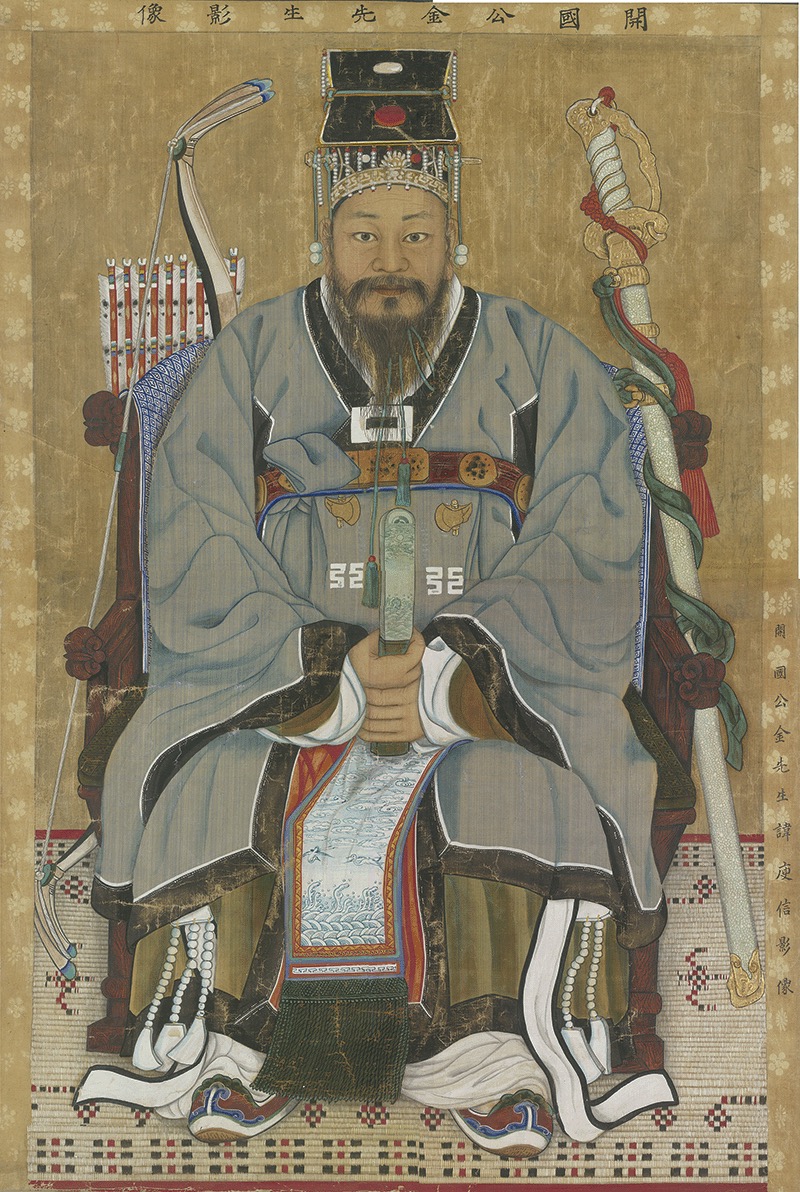
Who they were
Born in 595 of Gaya royal descent, he became a famed hwarang in his youth — a period surrounded by sword-and-spirit stories that are legend, not history. A marriage alliance bound his family to that of Kim Chun-chu, the future King Muyeol, and the two worked in close partnership.
What they did
In 660 he led the Silla armies that destroyed Baekje, defeating the general Gyebaek’s last stand at Hwangsanbeol. He then took part in the campaigns that brought down Goguryeo in 668, and afterward in the resistance to Tang ambitions on the peninsula.
Legacy
Silla honored him above all other subjects; in 835, per the Samguk Sagi, the Silla court under King Heungdeok posthumously ennobled him as King Heungmu — an honor unique for a subject. His tomb near Gyeongju is grandly decorated with zodiac reliefs, and he remains the model of the loyal unifying general in Korean memory.