Overview
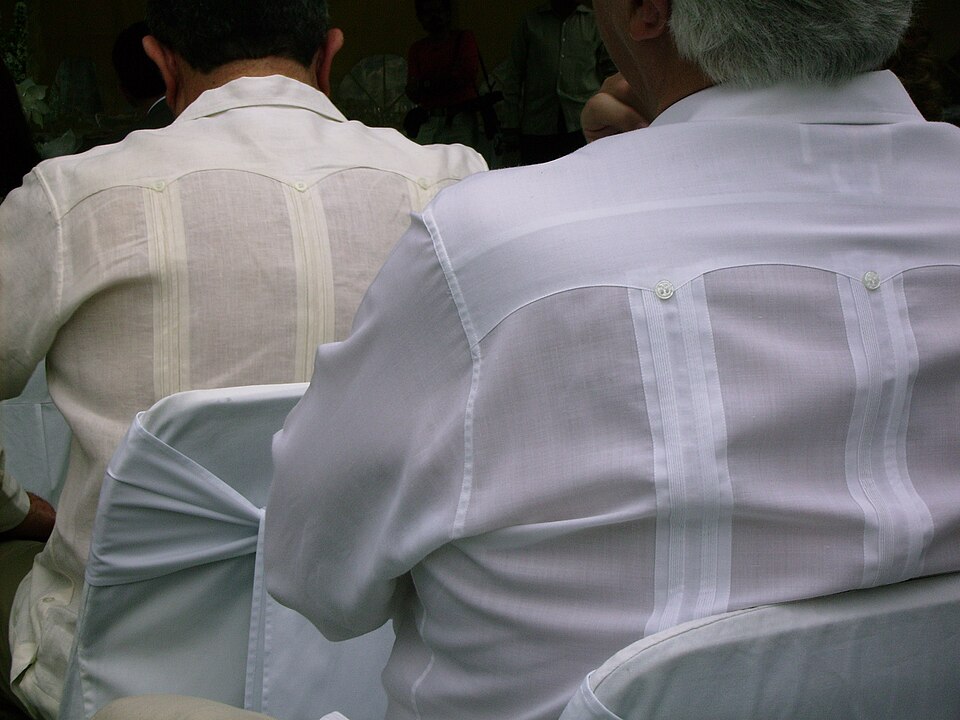
It is made in linen, cotton or fine ramie, most often white or pale, with a straight hem and short side vents so it hangs correctly untucked. The vertical pleating, the alforzas, runs in bands from shoulder to hem, and the four pockets — two at the chest, two at the hip — are the other fixed feature, often with the same pleating repeated. Sleeves are short or long, and the long-sleeved white one is the dress version.
How it is worn
It is worn outside the trousers, always, and pressing it flat is the whole maintenance: the pleats have to hold their lines or the shirt looks slept in. It replaces a jacket and tie rather than a shirt, so it is worn to weddings, to offices and to state occasions in the countries that claim it. Nothing is worn under it that shows, and it is not tucked in even with a suit.
History
Cuba and Mexico both claim the invention, and the Cuban account puts it in the Sancti Spiritus region in the nineteenth century, named for the guava pickers who used the pockets. It spread through the Caribbean, Yucatan and the Philippines, and Miami made it American. Several governments have declared it national formal dress, and the Cuban state adopted it for diplomatic occasions in 2010, which settled the argument politically if not historically.