What happened
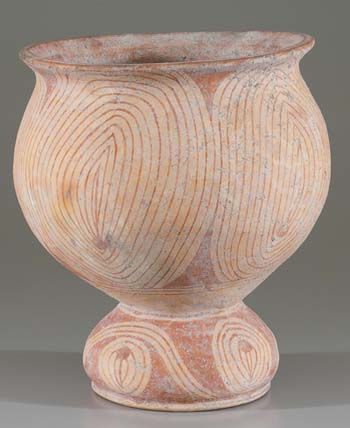
Ban Chiang was a mound village occupied from about 2100 BC to about AD 200. Its people farmed rice, raised animals, and buried their dead with grave goods. From roughly 1500–1000 BC they produced bronze — among the earliest metallurgy in Southeast Asia — and in the site’s late phases they made the celebrated red-on-buff painted pottery.
These dates are the revised scientific chronology: earlier claims placed the site far older before re-examination corrected them.
Background
The site was discovered by chance in 1966; by the commonly told account, a visiting student stumbled on potsherds. Major excavations in 1974–75 yielded the radiocarbon chronology. The finds prompted a scholarly reassessment: Southeast Asia came to be seen as an independent early center of metallurgy rather than a mere recipient.
Consequences
Ban Chiang was inscribed as UNESCO World Heritage in 1992. Its painted pots became icons of Thai prehistory — and targets of looting and forgery. The site anchors the earliest chapter of Thailand’s story, long before any Tai kingdom existed.