What it was
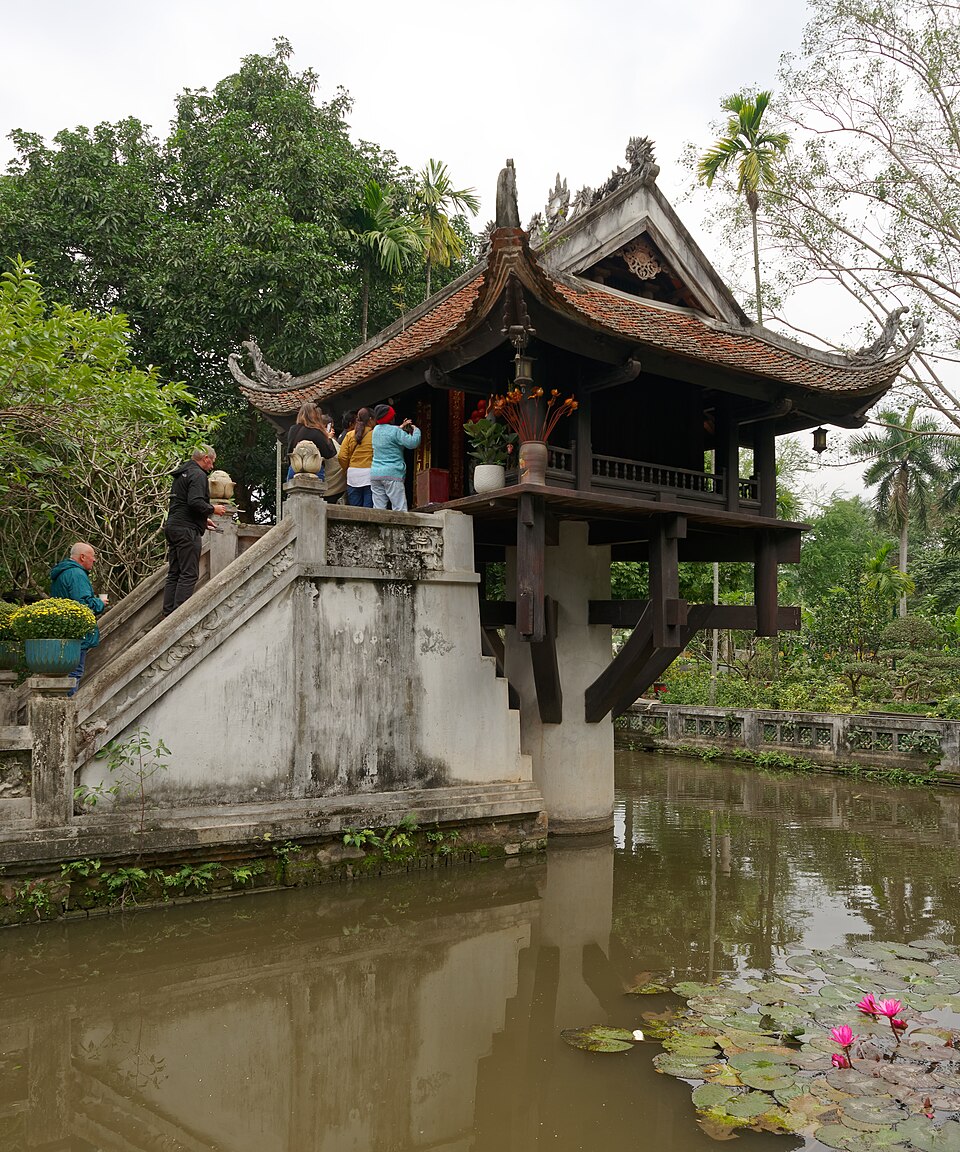
A small lotus-shaped wooden shrine to Quan Am, the bodhisattva of compassion, perched on a single pillar rising from a square lotus pond. It was built in 1049 under the Lý emperor Lý Thái Tông — tradition says after he dreamed of Quan Am seating him (in some tellings, handing him a son) on a lotus, and the childless emperor soon had an heir.
Role
It served as a royal votive shrine of the Buddhist Lý dynasty.
Fate
The pagoda was rebuilt and restored many times across the centuries. In 1954 departing French forces destroyed it, and it was reconstructed the following year. Today it is one of Hanoi’s most recognized monuments, its lotus-on-a-pillar silhouette shorthand for the city itself.