Overview
Cut into the sandstone in the thirteenth century BC, the two temples honour Ramesses II and his queen Nefertari, their facades guarded by seated colossi over twenty metres high. When the Aswan High Dam threatened to drown them, an international effort in the 1960s sawed the temples into blocks and rebuilt them on higher ground, an engineering feat as remarkable as the monuments. They stand near the Sudanese border, reached by road convoy or a short flight from Aswan.
Highlights
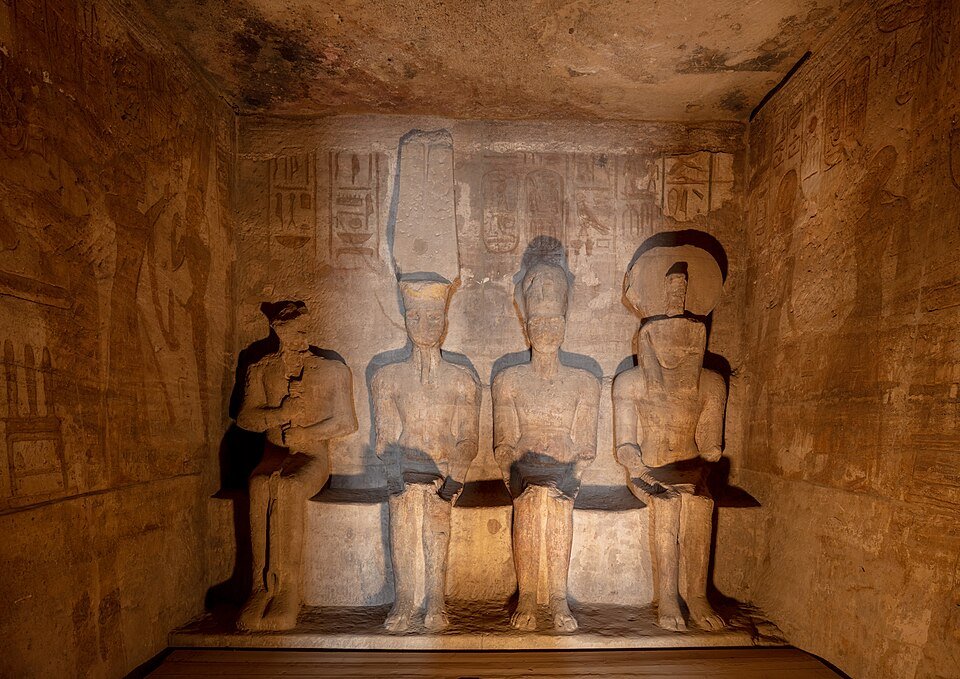
The Great Temple’s four giant seated figures of Ramesses II front the cliff, with a hall of pillars and painted reliefs cut deep into the rock behind. The smaller temple next to it honours Nefertari, its facade lined with standing statues of the royal couple. Twice a year, at dawn in February and October, the sun aligns to light the inner sanctuary, an event that still draws crowds.