Overview
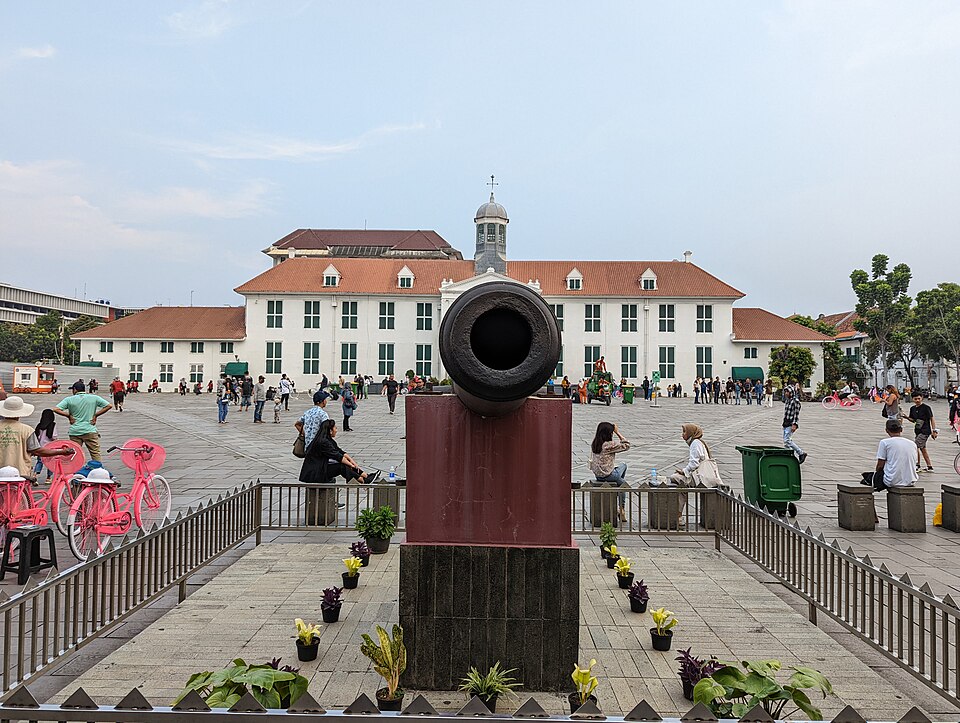
The Company laid the town out on canals like a Dutch city, which in the tropics bred mosquitoes rather than trade, and by 1800 the wealthy had moved south to higher ground. The 1710 city hall on the square is now the Jakarta History Museum, with the prison cells beneath it left open. The Wayang Museum and the Fine Art and Ceramics Museum face it, and the Si Jagur cannon lies in the square itself, still an object of local superstition.
Highlights
The square is best in the late afternoon, when it fills with families and the rented pink bicycles come out. Walk ten minutes north to Sunda Kelapa, where wooden pinisi schooners still load cargo by hand at the old harbour. Café Batavia, upstairs on the square, is a colonial-era interior you can sit in for the price of a coffee.