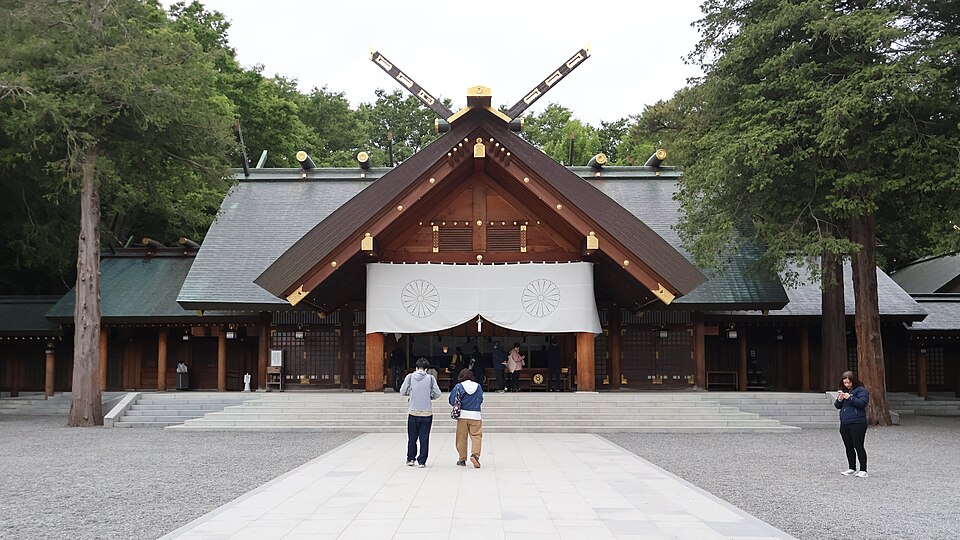
Overview
The shrine was built as an instrument of settlement policy: a Shinto centre for a territory that had been Ainu land, established in the same year as the Colonisation Commission. That history is not on the signage and is worth knowing while you visit. The grounds are large and wooded, with squirrels and, occasionally, foxes; the cherry and plum blossom arrive together in early May, a month after Honshū.
Highlights
Come in early May, when cherry and plum flower at once and the shrine holds its spring festival. The teahouse by the main gate sells hangetsu dumplings that people queue for. Maruyama Park adjoins it, and the trail up Mount Maruyama from the shrine’s western edge takes about forty minutes.