Overview
Emperor Shōmu ordered the statue after epidemics and revolts, and the casting consumed most of the country’s available bronze; the project nearly bankrupted the state, which is part of why the capital moved away from Nara soon after. The hall burned twice in civil wars and the current one is the third. Behind the statue, a pillar has a hole at its base said to be the size of the Buddha’s nostril, and children squeeze through it for luck.
Highlights
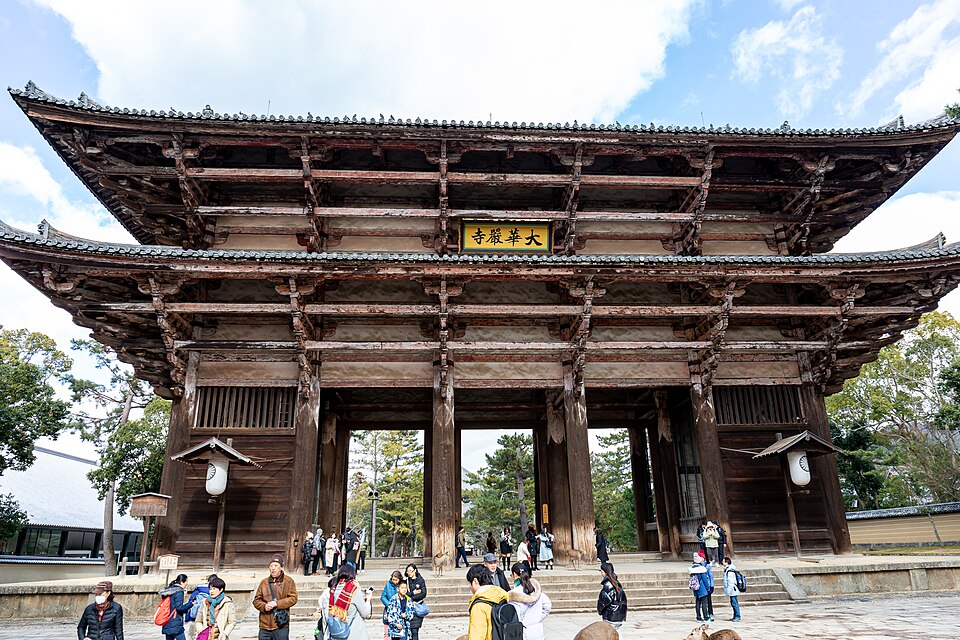
Walk up to Nigatsu-dō above the main hall — the veranda gives the best view over Nara and almost nobody climbs to it. The Great Buddha is best seen early, before school groups arrive by the coachload. The Nandaimon gate on the approach holds two eight-metre guardian figures carved by Unkei’s workshop in 1203, in a documented 69 days.