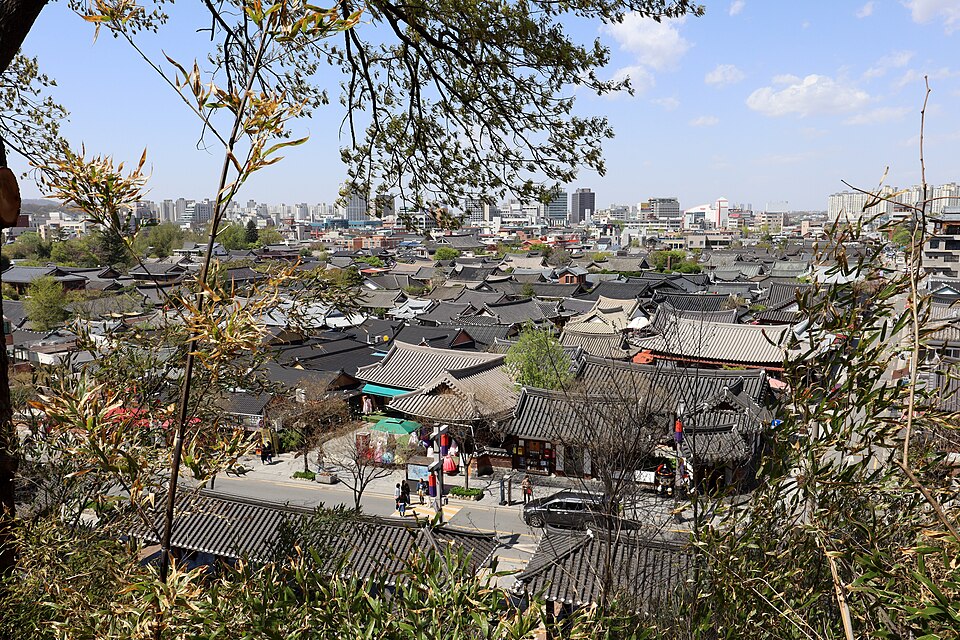
Overview
When Japanese merchants moved inside the old walls after 1910, Korean families built this quarter of tiled hanok on the eastern side as a statement — the village is a piece of colonial-era resistance in architecture, not a Joseon survival. Today it is heavily commercial: costume rental, street food, guesthouses. Jeonju is also the home of bibimbap, and the city’s version, served in a brass bowl with beef tartare and a raw egg, is the one to eat here.
Highlights
Walk the back lanes east of the main street, where people still live and the tiled roofs run unbroken. Eat bibimbap at a restaurant with a queue of Koreans rather than a photograph menu. The village is at its best early: the costume crowds arrive by eleven and the food streets are shoulder to shoulder by two.