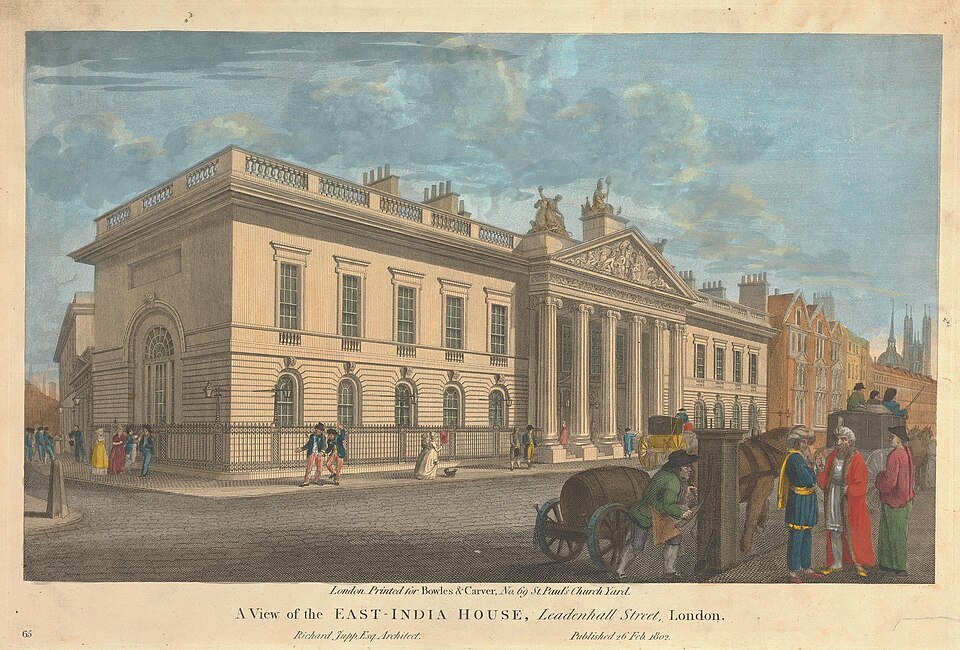
What it was
For a century and a half it traded textiles, spices, and tea from posts at Surat, Madras, Bombay, and Calcutta, backed by its own armies and ships. Robert Clive’s victory at Plassey in 1757 and the grant of Bengal’s revenues in 1765 turned merchants into rulers, and by the 1820s the company controlled most of the subcontinent, financing the China tea trade partly through opium exports.
Role
Company rule drew scandal and regulation almost immediately: the Bengal famine of 1770 killed millions under its administration (estimates vary widely), Warren Hastings was impeached, and Acts from 1773 onward tightened state control while its trade monopolies fell in 1813 and 1833.
Fate
The Indian Rebellion of 1857 — sparked among the company’s own sepoys — ended its rule: the Government of India Act 1858 transferred India to the Crown, and the company was formally dissolved in 1874. It remains the defining case of a corporation exercising state power.