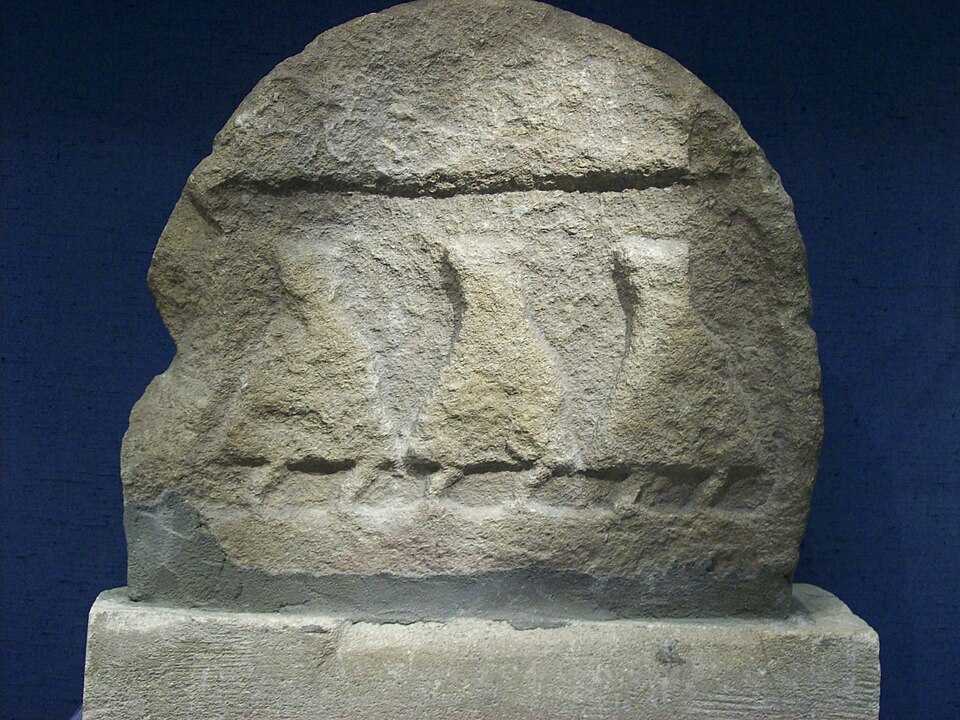
Overview
The basic wardrobe is the empire’s — a tunic to the knee, a mantle over it, trousers on soldiers and on men who rode — but the province adapted it for weather. Britain’s contribution is the hooded cloak: the birrus Britannicus, a heavy hooded overcoat, and the cucullus, a short hooded cape, both named in the Edict of Diocletian on maximum prices, which is where a provincial garment turns up as a priced commodity in a Mediterranean document. Vindolanda’s writing tablets add socks and underpants sent from home, which says the rest plainly enough.
How it is worn
The tunic is pulled over the head and belted; a cloak is fastened at the shoulder with a brooch, and British brooches are numerous and distinctive enough to be a dating tool in themselves. Hooded garments are cut in one with the hood attached, so the head is covered without a second item to lose, and the weight of the cloth does the work that a Mediterranean drape could not. Under all of it, in the north at least, went wool socks and layered tunics.
History
The dress lasted as long as the province’s economy did. Villa mosaics and tombstones show the tunic-and-mantle wardrobe through the fourth century, and the brooch types shift steadily enough to track. After 410 the imported cloth and the coin to buy it both go, and what follows in the fifth century is dressed from local looms with Germanic fastenings — the wardrobe of the Anglo-Saxon period, arriving as the Roman one leaves.