Who they were
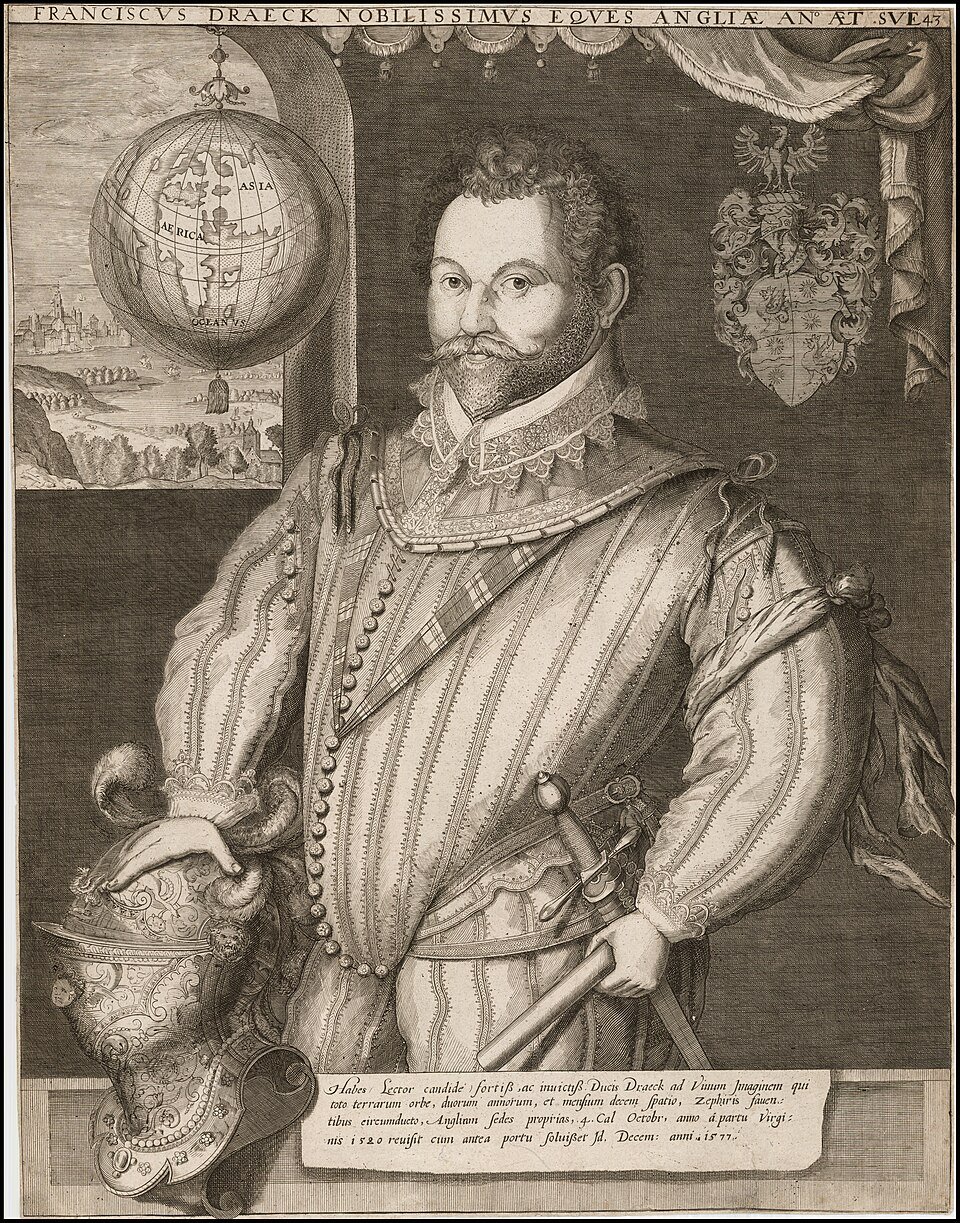
Born in Devon around 1540, Drake went to sea young and made his early voyages in the 1560s with his kinsman John Hawkins, on expeditions that carried enslaved Africans to Spanish America — among the first English ventures in the Atlantic slave trade. After the Spanish attacked their fleet at San Juan de Ulua in 1568, Drake turned to raiding Spanish treasure ports and shipping with royal encouragement, operating as a privateer that Spain regarded as a pirate.
What they did
Sailing in 1577 with the Golden Hind, he raided along the Pacific coast of South America, claimed New Albion in present-day California, and returned across the Pacific and around Africa in 1580, completing the first English circumnavigation; Elizabeth I knighted him aboard his ship. In 1587 his raid on Cadiz delayed the Spanish invasion fleet, and in 1588 he served as vice admiral of the fleet that fought the Armada up the Channel. He died of dysentery off Panama in 1596 during a final West Indies expedition.
Legacy
Drake’s voyages announced England’s arrival as an oceanic power and made him an enduring national legend, while his slaving voyages with Hawkins and his plunder of Spanish settlements have an equal place in the record. Spanish tradition long remembered him as the corsair El Draque.