Overview
The Han is the dynasty later ages looked back to, which is why the clothing tradition is called hanfu — Han dress — rather than being named after anyone else. It also opened the routes along which Chinese silk reached Rome, so this is the period in which Chinese clothing became a world commodity.
Key garments and style
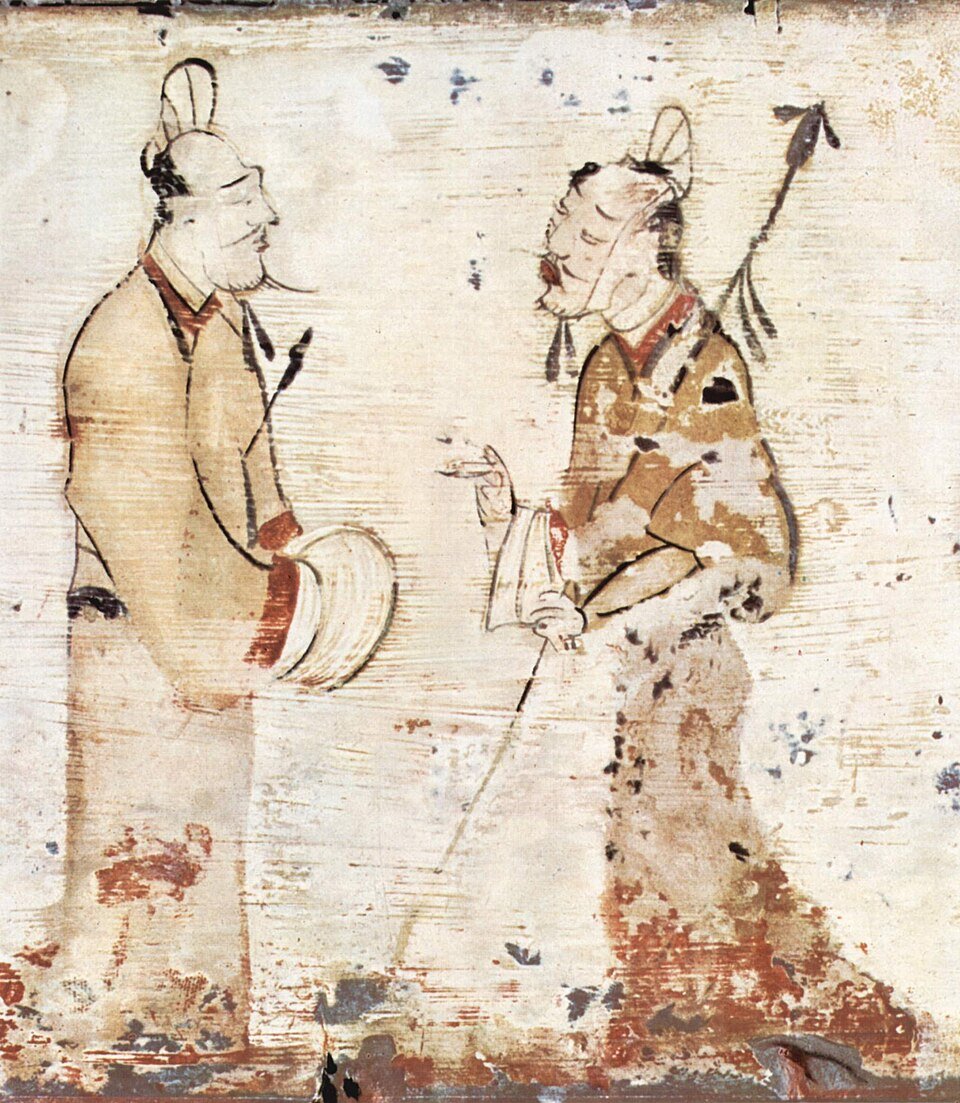
The principal garment is the shenyi, a robe made by joining an upper and a lower section and then wrapping it around the body: early in the dynasty with the quju, a curved hem winding several times around, and later with the straight-hemmed zhiju. Women also wore a short jacket with a long skirt. Rank appeared in the man’s cap and in the colour of the silk cord attached to his official seal, worn at the waist.
The Mawangdui tombs preserve the period’s textiles directly, sealed in the second century BC: patterned silks, embroidery, and a plain gauze gown weighing under fifty grams, so fine that it is the standard demonstration of Han weaving.
Silk moved west along the routes opened after Zhang Qian’s missions, reaching Rome, where senators complained about the expense and the transparency of it.
Transition
The Han collapse opened three centuries of division, during which northern riding dress entered the wardrobe and eventually produced the Tang round-collar robe.