Overview
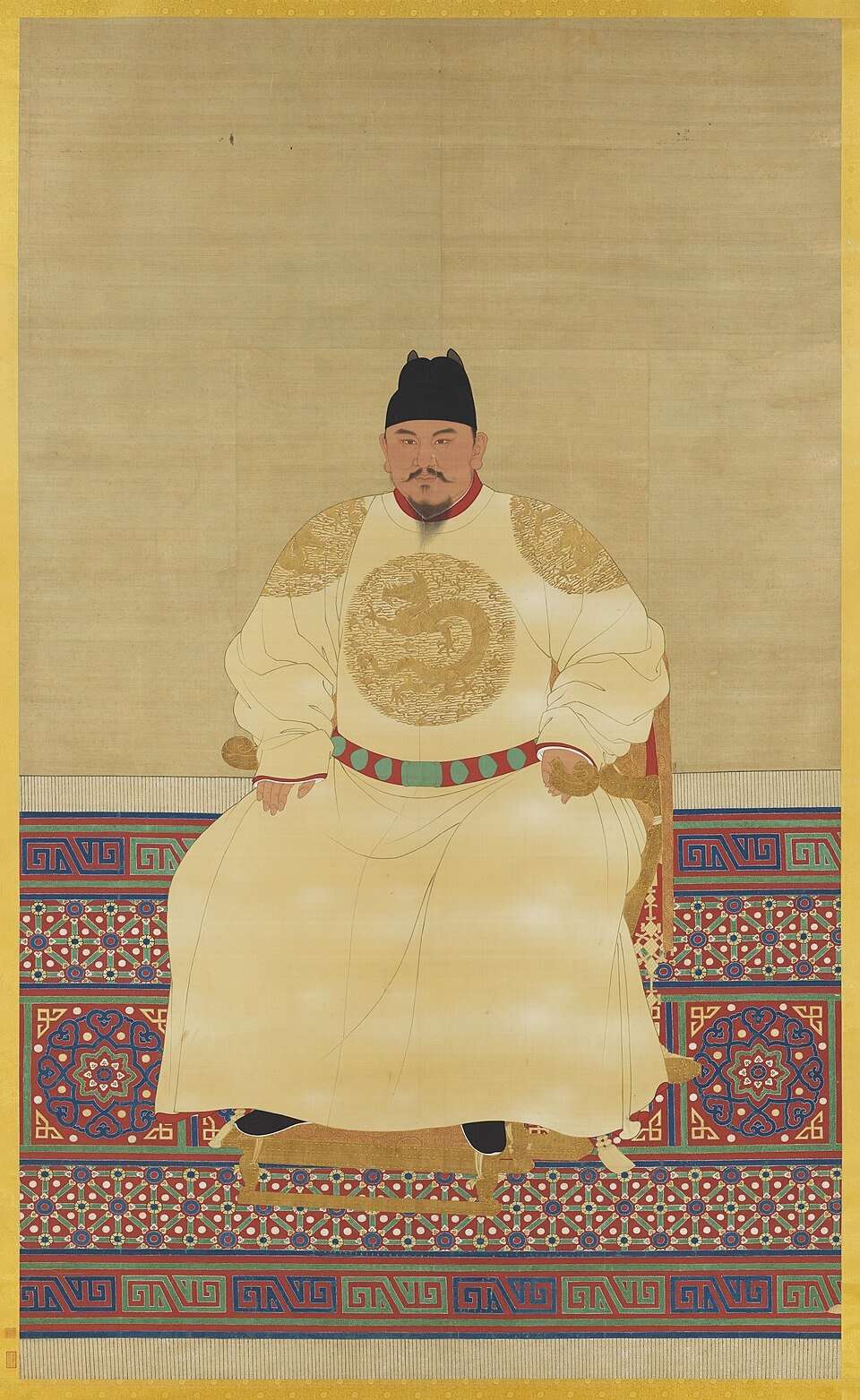
The Ming began with a dress decree. Having expelled the Mongols, the first emperor banned Mongol clothing, names and speech and ordered a return to Tang and Song forms — clothing legislated as a statement about who now ruled, and one of the most explicit such acts in Chinese history.
Key garments and style
Officials wore a round-collared robe carrying the buzi, a square badge on chest and back showing rank: birds for civil office, beasts for military, in a graded series. It is the origin of what Western writers later called the mandarin square, and it made rank readable across a courtyard. The emperor wore the dragon robe, with the five-clawed dragon reserved to him.
Women wore the aoqun, a jacket over a skirt, the jacket lengthening through the dynasty; in the late Ming a stand-up collar fastened with small metal buttons appears, one of the few genuinely new constructions of the period.
Underneath the court system, the material change was cotton. Spread since the Yuan and pushed by early Ming policy requiring households to plant it, cotton became the ordinary person’s cloth, while fine silk and dense embroidery marked the elite.
Transition
The Manchu conquest reversed the Ming’s founding act: the queue edict and Qing dress regulations forced a change of men’s clothing on pain of death, and Ming forms survived mainly in women’s dress and on the stage.