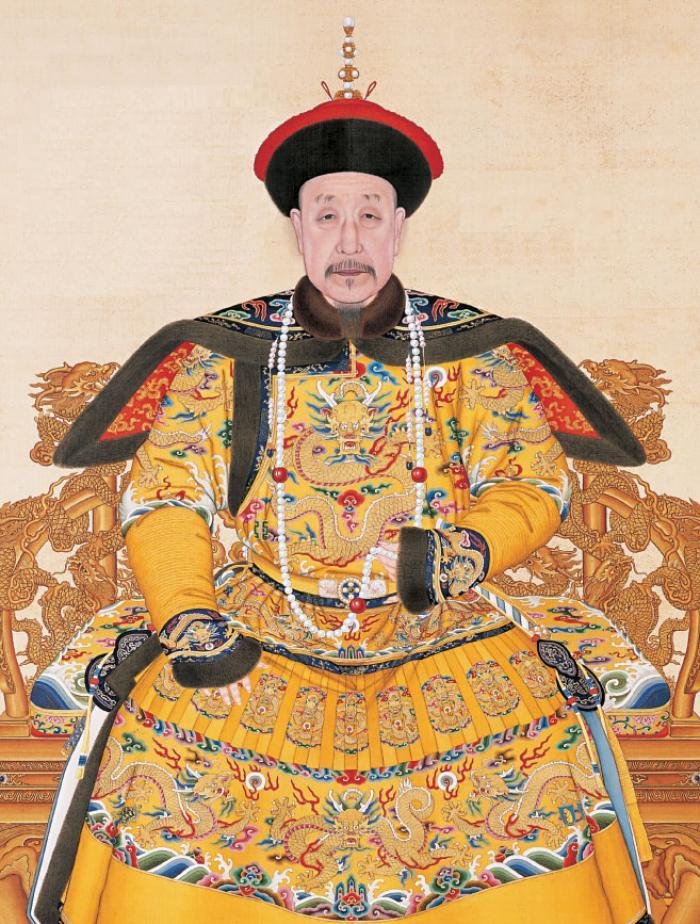
Overview
The Qing imposed dress by force and then made an exception that shaped the next three centuries. Manchu clothing and the queue were required of Han men on pain of death; Han women were left alone. The result was a country where men and women of the same household dressed from two different traditions.
Key garments and style
Men wore the changpao, a long side-fastening gown, often under the magua, a short riding jacket, with the matixiu horse-hoof cuff that could be turned down over the hand — a detail carried from mounted archery into court ceremony. The head was shaved at the front and the rest braided into the queue.
Manchu banner women wore a long one-piece gown, unbound feet in platform shoes raised on a central block, and the wide liangbatou headdress. Han women kept the jacket-and-skirt, and kept footbinding, which the Qing repeatedly banned and never suppressed.
That divergence was formalised in the convention summarised as ten submissions and ten exemptions: men submit, women do not; the living submit, the dead do not; officials submit, actors on stage do not. It is why Ming dress survived in women’s clothing and in the theatre.
Rank badges and the dragon robe carried over from the Ming into a more elaborate court code.
Transition
The 1911 revolution removed the queue and the court dress together, and the Manchu banner gown was reworked in Shanghai into the qipao.