What happened
Warring States kingdoms walled against each other and against the steppe. After unification in 221 BC, the First Emperor had general Meng Tian connect and extend the northern walls (c. 214 BC) — rammed-earth work of which little visibly survives. The Han later extended walls far west to shield the Silk Road corridor.
Background
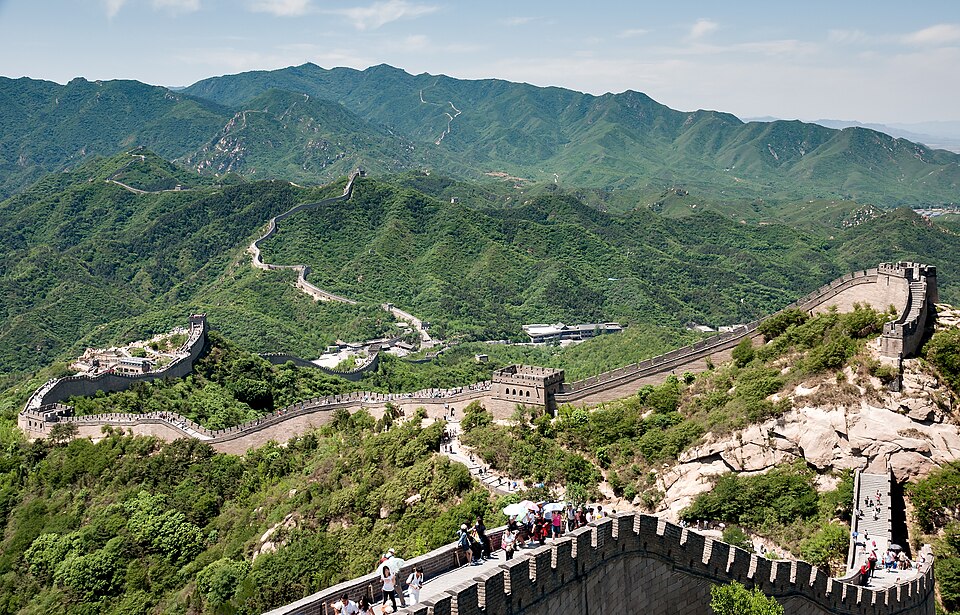
The iconic brick-and-stone wall with watchtowers — Badaling and Mutianyu near Beijing — is almost entirely Ming (1368–1644), built up especially after the Tumu crisis of 1449 sharpened the Mongol threat. The toll of conscript labor fed legends such as Meng Jiangnü, whose weeping was said to topple a stretch of wall.
Consequences
Official surveys measured the Ming walls at about 8,850 km (2009) and all historical walls together at over 21,000 km (2012). The wall was inscribed as UNESCO World Heritage in 1987. The popular claim that it is visible from space with the naked eye is false.