Overview
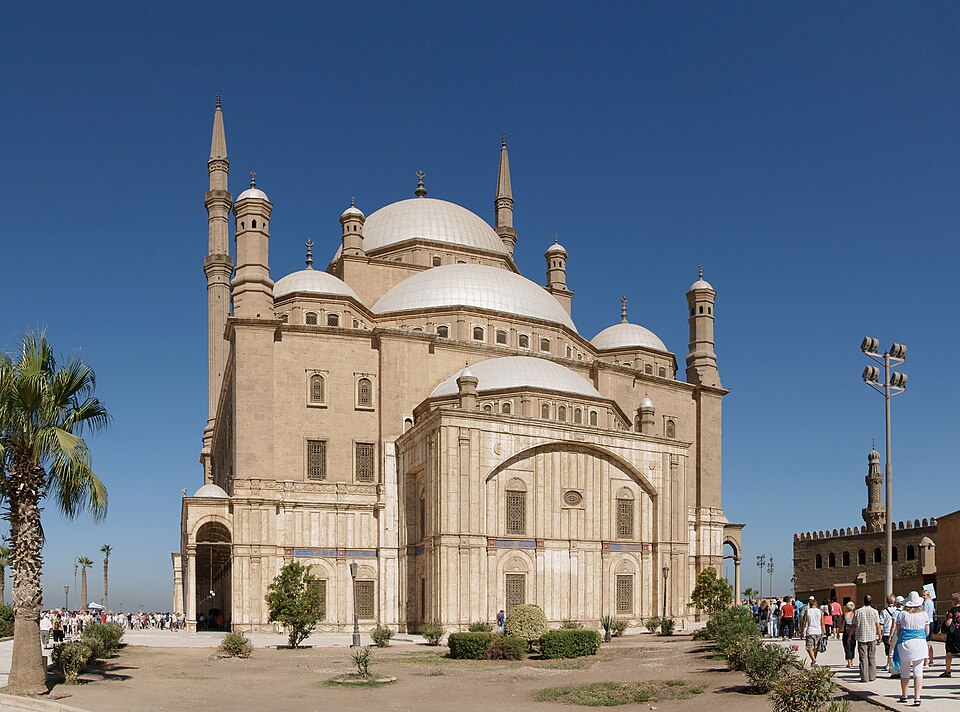
In 1805 Muhammad Ali, an Ottoman commander, emerged from the chaos that followed the French withdrawal as governor (wali) of Egypt. In 1811 he broke the power of the mamluks by massacring their leaders at the Cairo Citadel. From his rise to the British occupation of 1882, his dynasty dominated Egypt’s transformation.
Key developments
Muhammad Ali pursued state-led modernization: a European-style army and navy, government monopolies, long-staple cotton as an export crop, new schools and student missions to Europe, and the Bulaq printing press. He expanded into Sudan in the 1820s, campaigned in Arabia and Greece, and conquered Syria (1831–40); the European powers intervened in 1840 and forced a retreat, but the dynasty won hereditary rule of Egypt in 1841. His successor Said granted the Suez Canal concession in 1854, and Ismail — khedive from 1867 — pushed Europeanization, rebuilding Cairo, laying railways, and opening the canal in 1869, all funded by heavy borrowing.
End and transition
The debt crisis forced Egypt to sell its canal shares to Britain in 1875; Anglo-French financial control followed, and Ismail was deposed in 1879. The nationalist Urabi movement (1879–82), under the slogan “Egypt for the Egyptians,” challenged the khedive and European control; Britain bombarded Alexandria, won at Tel el-Kebir in 1882, and began its occupation. The dynasty itself reigned on under British dominance until the monarchy fell in 1952–53.