Overview
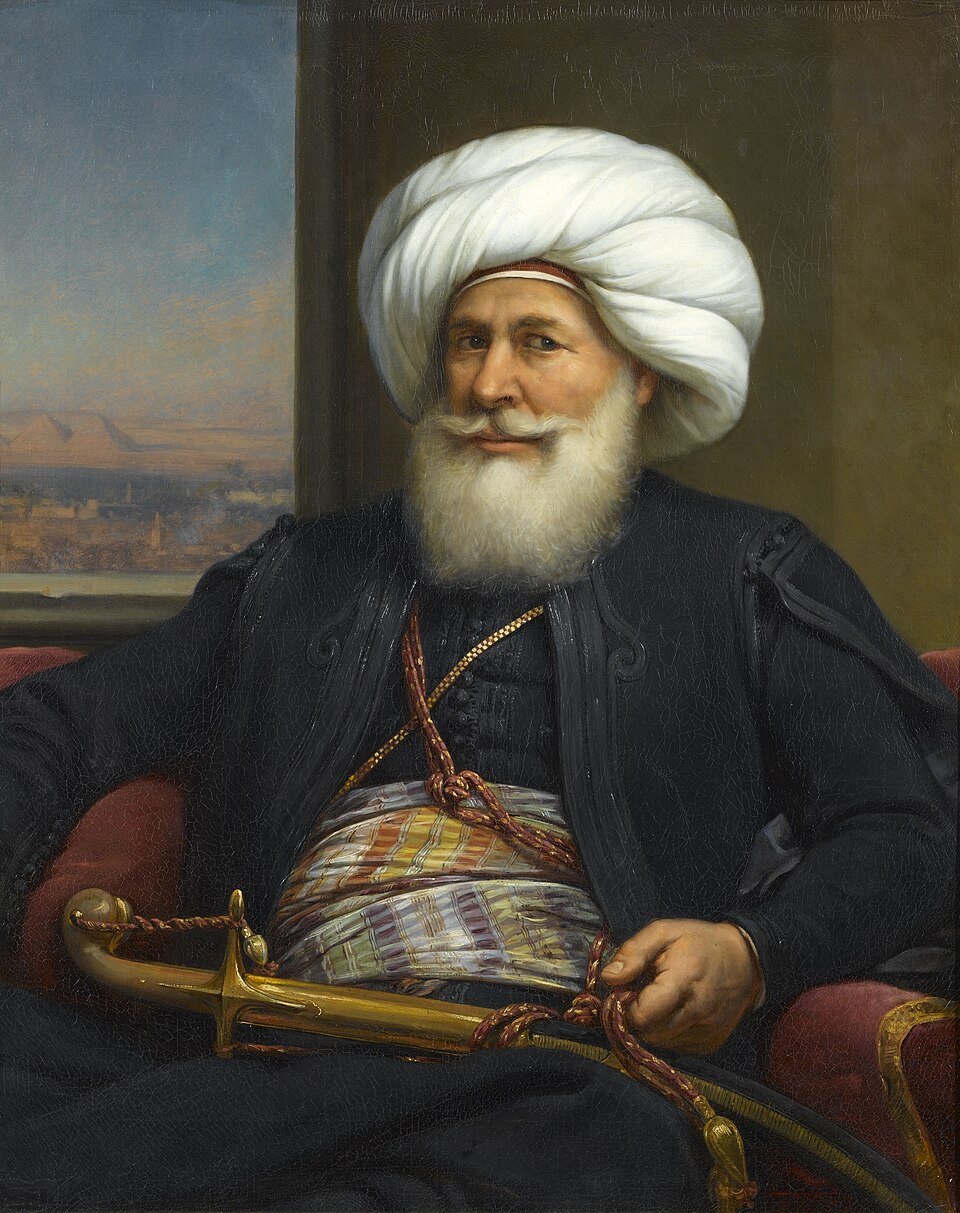
Under Muhammad Ali and his successors, Egyptian dress became state policy. A dynasty modernising its army, bureaucracy and economy on European lines dressed those institutions to match, so clothing changed from the top down and from the capital outward — and what a man wore on his head announced which world he belonged to.
Key garments and style
The tarboosh, the red felt cap also called the fez, became the badge of the modernised classes: army officers, officials, effendis, worn with a European frock coat or uniform. It read as Ottoman rather than European, and that was the point — modern without being foreign. Against it stood the turban of the religious establishment and the traditional professions, and the plain galabeya of the great majority of Egyptians, which the reforms never touched.
Cotton underwrites all of it. Muhammad Ali’s introduction of long-staple cotton as a state monopoly rebuilt the Egyptian economy around a textile crop, and the American Civil War then sent prices to extraordinary heights. Egypt was clothing the world’s mills while its own elite re-dressed itself in imported European cloth.
Elite women’s dress moved more slowly and less visibly, since it changed inside the household first, with European fashions adopted in private well before the street veil was set aside.
Transition
After 1882 and under British occupation, European dress spread further among the urban middle class, and the tarboosh itself — once the emblem of reform — came in time to look like the old order it had replaced.