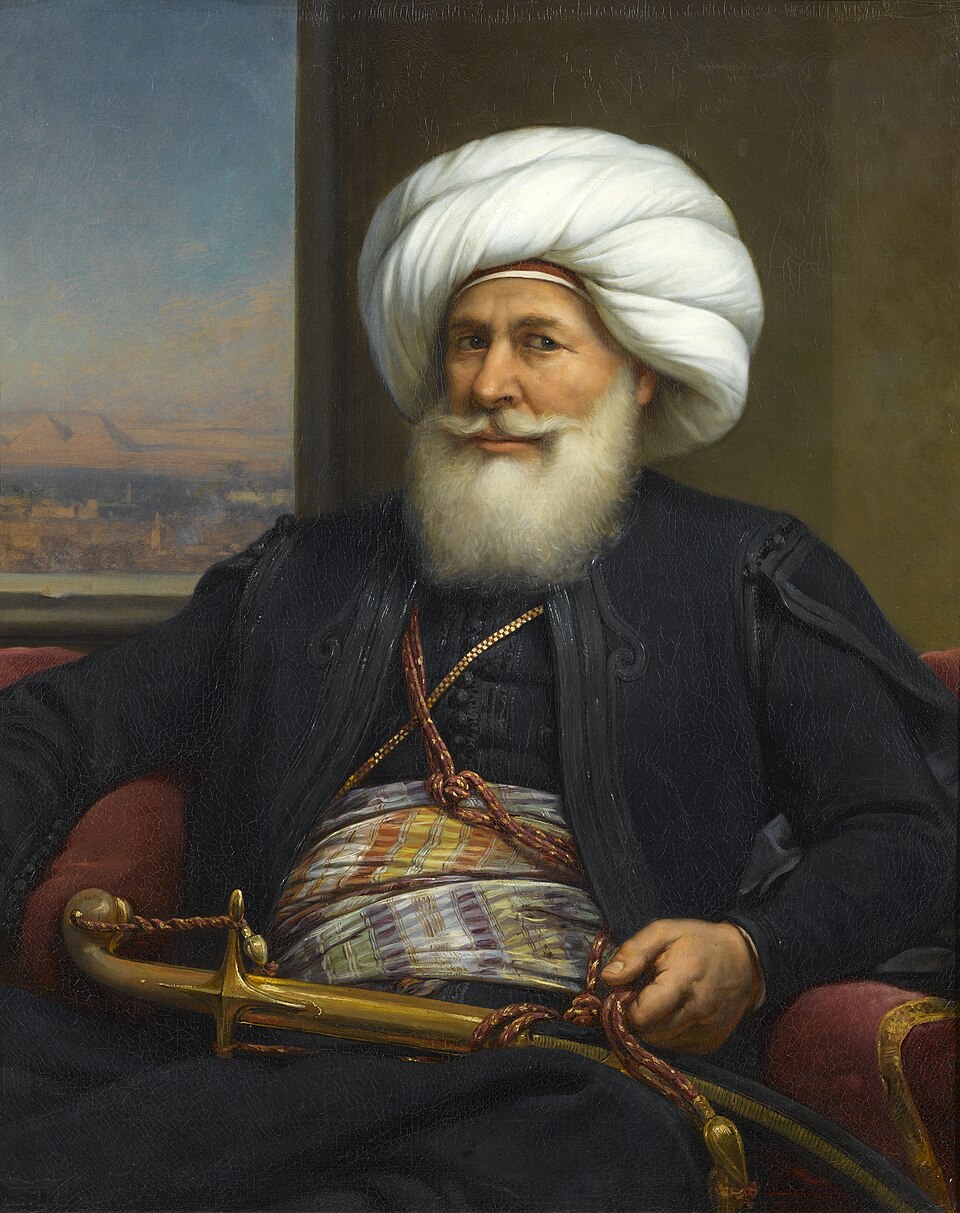
Who they were
Muhammad Ali (1769–1849) was born in Kavala, in modern Greece, to an Albanian family in Ottoman service. He arrived in Egypt in 1801 with the Ottoman forces sent against the French.
What they did
He outmaneuvered his rivals to be recognized as Ottoman governor (wali) of Egypt in 1805, and destroyed the mamluk leadership in the Citadel massacre of 1811. Often called the founder of modern Egypt, he built a conscript army, state monopolies, and a cotton economy, opened schools, sent students to Europe, and experimented with industry. He also built an empire within the empire — Sudan, Arabia, Greece (until the powers’ navies destroyed his fleet at Navarino in 1827), and Syria — defeating Ottoman armies before European intervention in 1840–41 checked him, though his family kept hereditary rule of Egypt.
Legacy
His descendants, as khedives and later kings, ruled Egypt until the monarchy fell in 1952–53. He is buried in the alabaster Muhammad Ali Mosque he built in the Cairo Citadel, still a landmark of the city’s skyline.