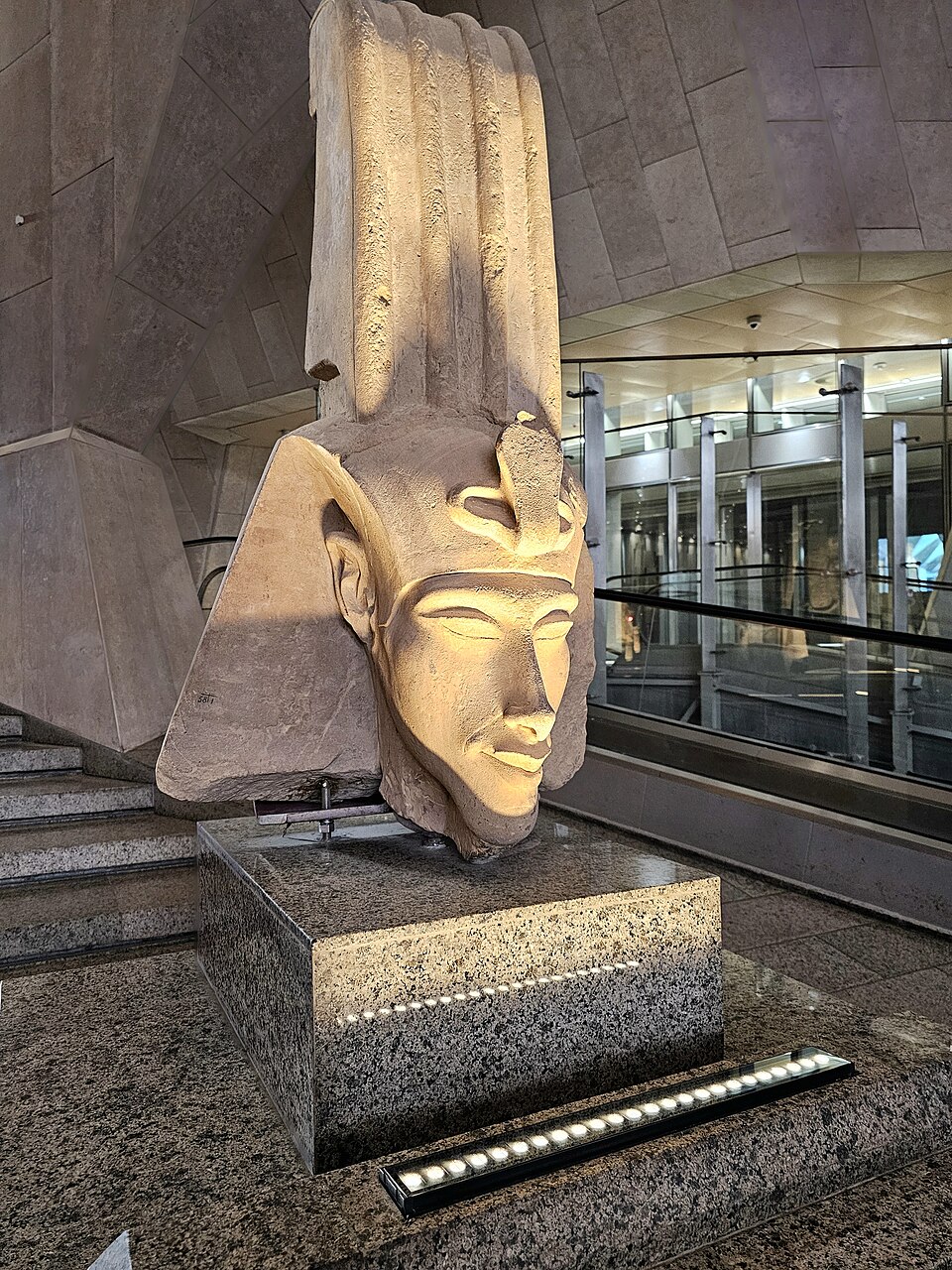
Who they were
Akhenaten (r. c. 1353–c. 1336 BC) was an 18th Dynasty king, a son of Amenhotep III. He began his reign under the name Amenhotep IV and later changed it to Akhenaten.
What they did
He raised the Aten, the sun disk, to supreme and eventually near-exclusive worship, closing or sidelining the temples of other gods, above all Amun — a reform often described as an early experiment in monotheism, though scholars debate the label. He founded a new capital, Akhetaten (modern Amarna), on virgin ground. Amarna art broke with convention, showing elongated features and intimate family scenes with his wife Nefertiti and their daughters. The Amarna Letters, diplomatic clay tablets found at the site, illuminate the foreign policy of his era.
Legacy
After his death the old cults were restored, the capital was abandoned, and later king lists omitted him; his monuments were dismantled, and he was remembered as the heretic king. A 2010 DNA study identified the mummy from tomb KV55 — most likely Akhenaten — as the father of Tutankhamun.