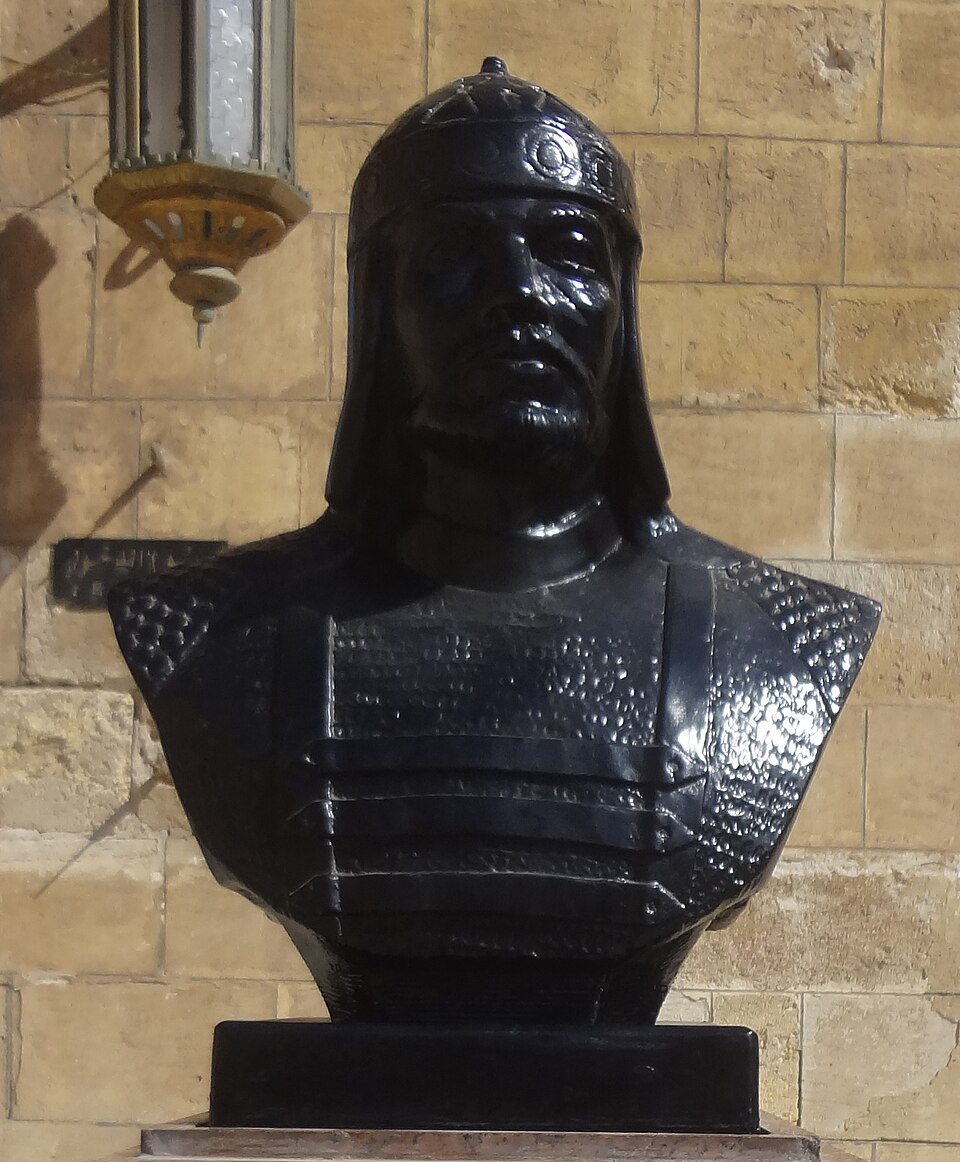
Who they were
Baibars (c. 1223–1277) was of Kipchak Turkic origin, sold into slavery as a youth and trained in Egypt’s Bahri mamluk corps. He served as a commander in the victory over the Mongols at Ain Jalut in 1260 under Sultan Qutuz, and took the throne weeks later after Qutuz was murdered — medieval sources implicate Baibars in the killing.
What they did
As sultan from 1260 to 1277 he made the Mamluk state durable. He crushed Crusader strongholds — Caesarea and Arsuf in 1265, Antioch in 1268 — fought repeated campaigns against the Mongol Ilkhanate, and subdued the Assassins’ castles in Syria. In 1261 he installed a surviving Abbasid as figurehead caliph in Cairo, giving Mamluk rule Islamic legitimacy. He was an efficient ruler as well, building a fast postal relay network (the barid) linking Cairo and Damascus, along with fortifications, canals, and public works.
Legacy
Baibars is remembered as a founding hero of the Mamluk sultanate. His life grew into the popular Arabic folk epic Sirat Baybars, still performed centuries later.