Who they were
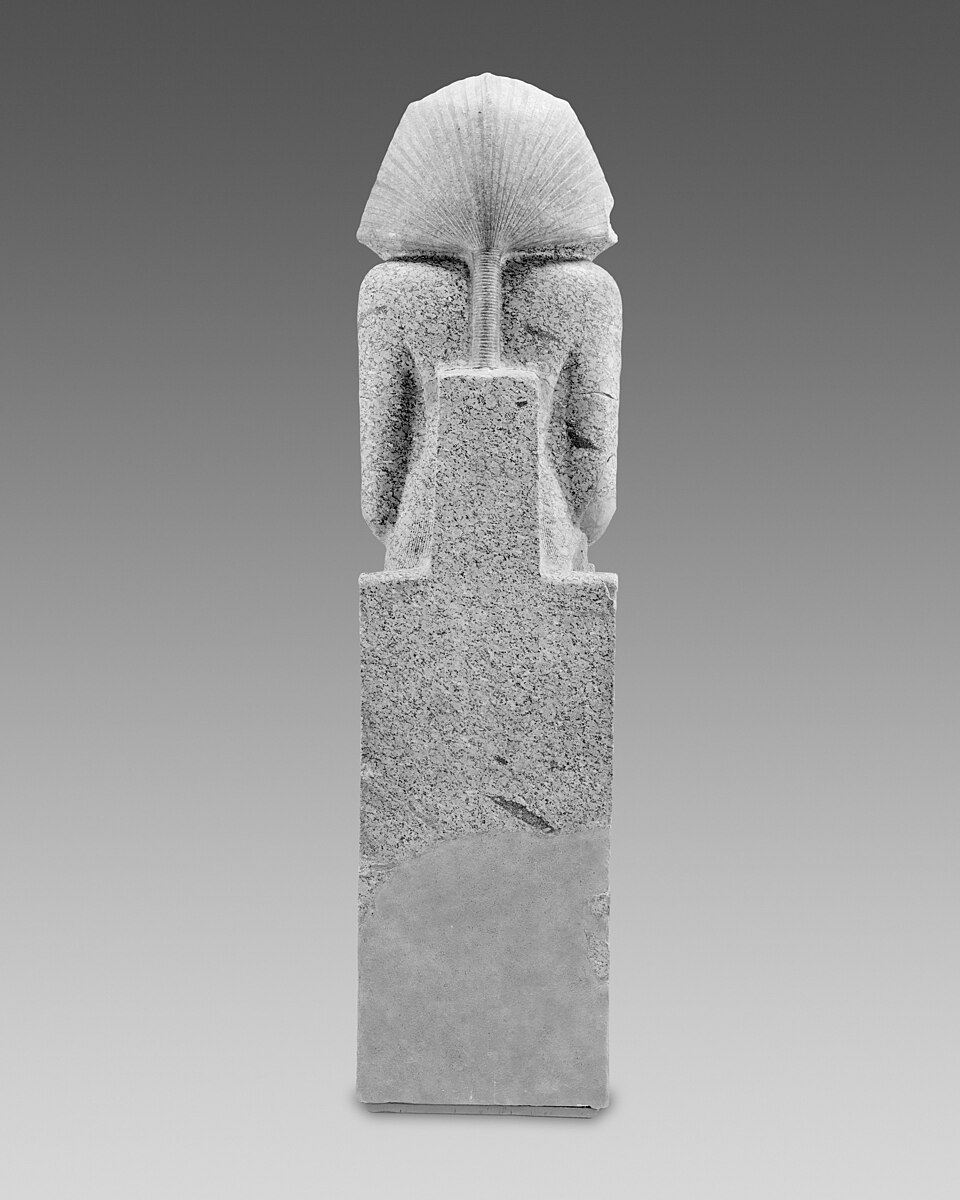
Hatshepsut was the daughter of Thutmose I and the chief wife of Thutmose II. She ruled as regent for her young stepson Thutmose III, then had herself crowned pharaoh (r. c. 1479–c. 1458 BC). In official art she adopted full royal iconography, including the ceremonial false beard.
What they did
She pursued peace, building, and trade rather than conquest. Her great expedition to the land of Punt, recorded in reliefs, brought back incense trees, myrrh, and exotic goods. She built the terraced mortuary temple Djeser-Djeseru at Deir el-Bahari — a project associated with her official Senenmut — and erected obelisks at Karnak.
Legacy
Late in Thutmose III’s reign, her images and names were systematically erased from monuments. The motives are debated, with dynastic legitimacy a leading explanation. A mummy from tomb KV60 was identified as hers in 2007, though the identification is still discussed.