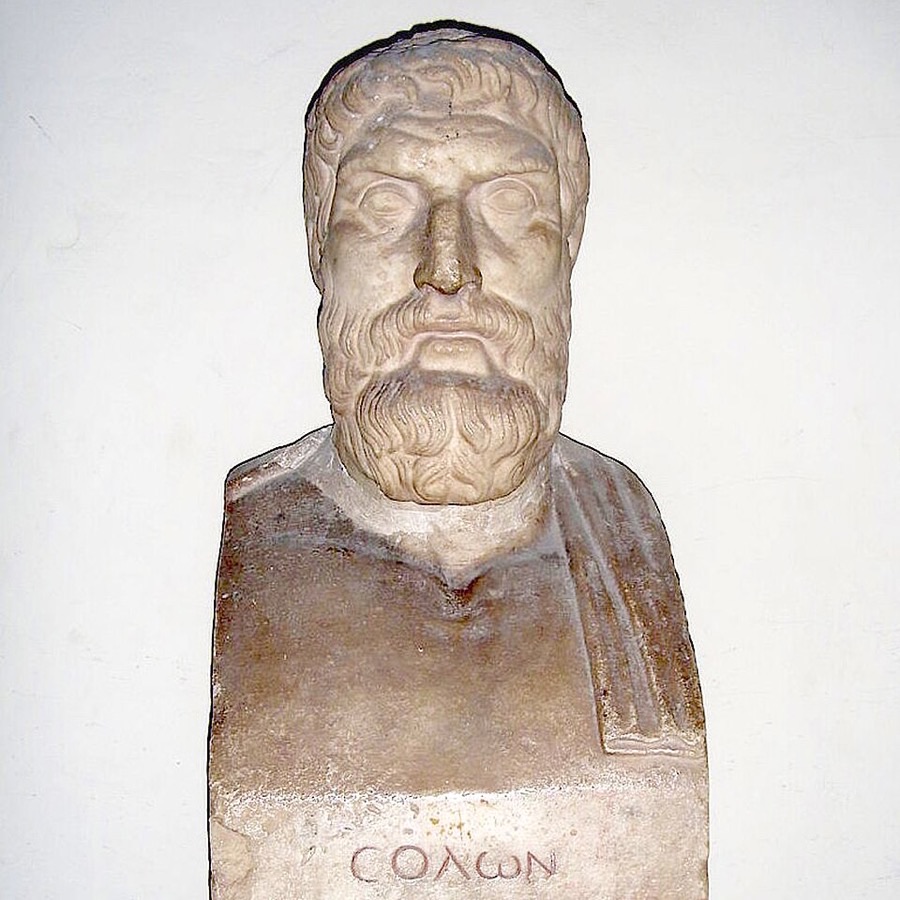
Who they were
Solon (c. 630–c. 560 BC) was an Athenian statesman and poet. Amid a crisis between indebted farmers and aristocrats he was appointed archon with reforming powers, traditionally in 594/593 BC. Antiquity counted him among the Seven Sages.
What they did
His most famous act was the seisachtheia, a shaking-off of burdens: he cancelled debts secured on the person, freed those enslaved for debt, and banned debt-slavery of citizens. Constitutionally he classified citizens by wealth rather than birth for office-holding, created — per tradition — the Council of Four Hundred, and strengthened the popular assembly and courts, laying groundwork that Cleisthenes would later build into democracy; much of this picture, though, is later reconstruction. He is also credited with standardizing weights and measures, encouraging olive oil as the export crop, and, per the tradition, granting citizenship to immigrant craftsmen.
Legacy
Solon’s own poems survive as the main contemporary source, defending his middle course between rich and poor. The tale of his meeting with Croesus — his warning to call no man happy until he is dead — is chronologically impossible, yet through Herodotus it became immortal legend.