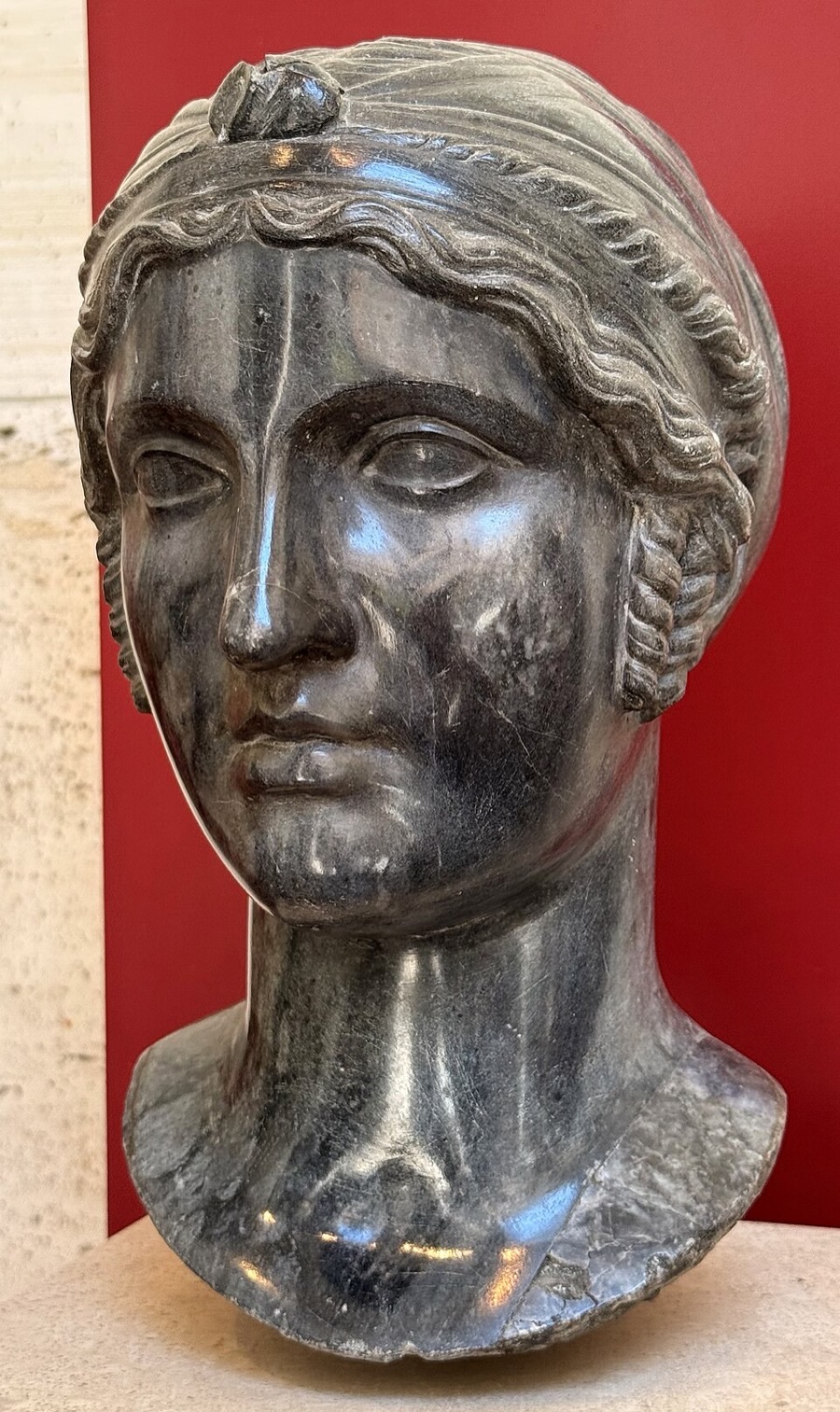
Who they were
Sappho lived c. 630–c. 570 BC (the dates are approximate) in Mytilene on the island of Lesbos, and stands among the greatest lyric voices of antiquity — later tradition even has Plato calling her the tenth Muse. Little of her life is certain: the later biographical traditions of a marriage, a daughter Cleis, exile to Sicily, and a legendary leap from the Leucadian cliff mix fact and invention.
What they did
She composed songs to the lyre in Aeolic Greek: wedding songs, hymns, and above all intensely personal poems of love and longing, many addressed to women — an association that gave the words sapphic and lesbian their modern senses. Of a reported nine ancient books of her poetry, only one complete poem, the Ode to Aphrodite, survives along with fragments — some recovered from Egyptian papyri as recently as 2004 and 2014.
Legacy
Admired throughout antiquity, she was quoted by critics and imitated by Catullus and Horace. She remains a founding figure of the personal lyric, and an icon for women’s writing and, in modern times, for lesbian identity.