Overview
Between c. 800 and 480 BC Greece was reborn. The polis, or city-state, crystallized as the basic political unit — hundreds of them, fiercely independent. In the great colonization, driven by land hunger and trade, Greek settlements spread from the Black Sea to southern Italy and Sicily (Magna Graecia) and North Africa.
Key developments
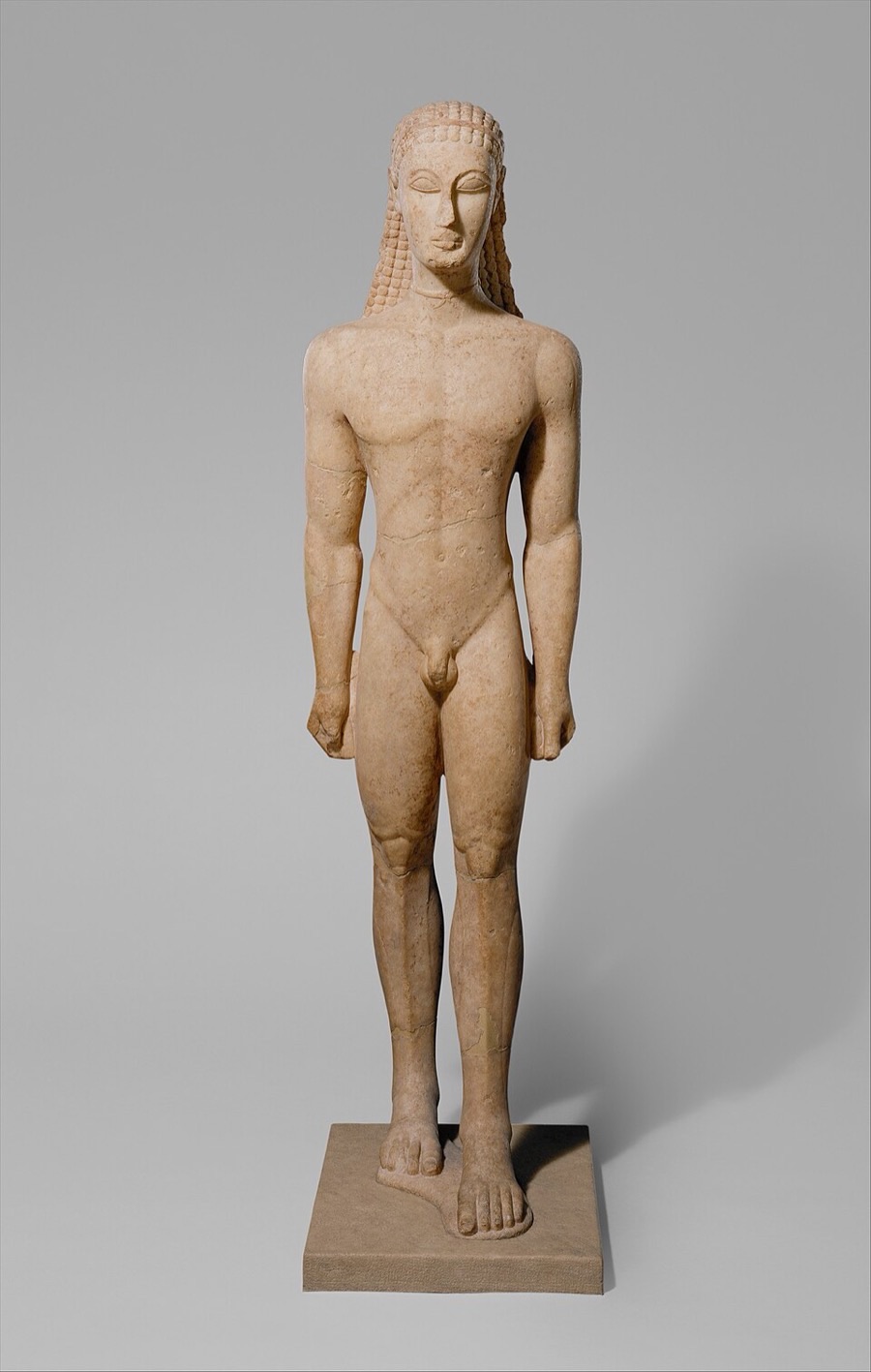
The alphabet adapted from Phoenician came into use, Homer’s epics were written down, and Hesiod and the lyric poets Sappho and Archilochus composed; the first Olympic Games are traditionally dated to 776 BC. Political experimentation ranged from lawgivers — the semi-legendary Lycurgus of Sparta, Solon of Athens — to tyrants such as Peisistratos, and at the period’s end the reforms of Cleisthenes (508/507 BC) founded Athenian democracy. Sparta developed its unique militarized society resting on helot serf labor, and hoplite phalanx warfare spread. Archaic art flourished in kouros statues and black- and red-figure pottery, and around 600 BC the first coinage reached Greece from Lydia.
End and transition
The period ends with the great invasions of the Persian Wars in 480 BC, the conventional boundary with the Classical age.