Overview
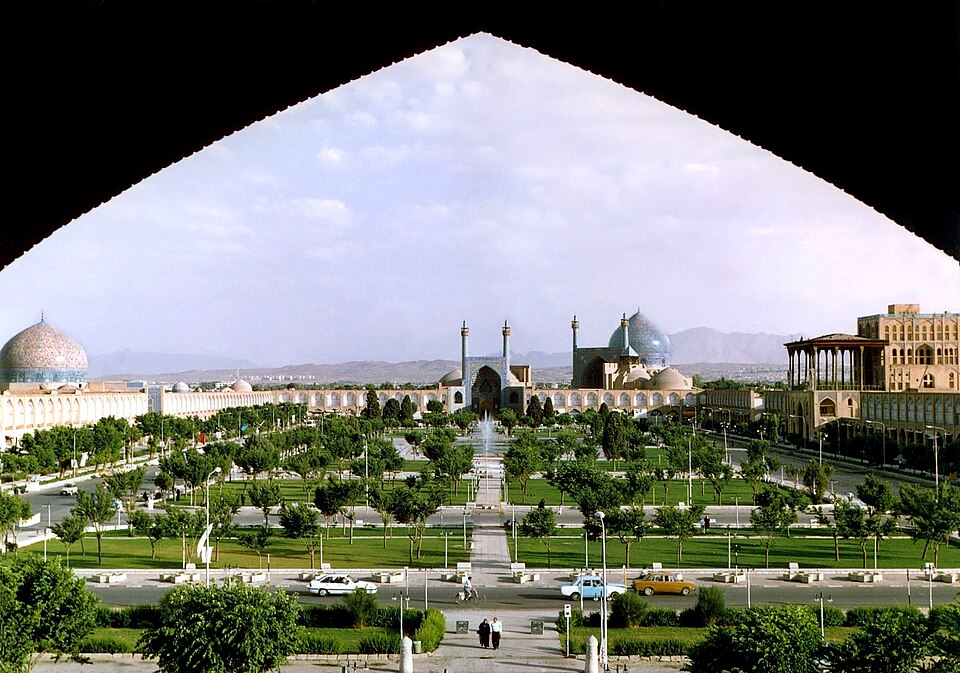
Naqsh-e Jahan Square, meaning Image of the World, is the monumental central square of Isfahan. It was laid out between 1598 and 1629, after Abbas I moved the Safavid capital to the city and set out to make it a showcase of his empire.
Description
The square is a rectangle of roughly 560 by 160 metres, framed by continuous two-storey arcades. Four masterpieces face each other across it: the Shah Mosque on the south, the delicately tiled Sheikh Lotfollah Mosque on the east, the Ali Qapu palace on the west, and the Qeysarie Gate leading into the Grand Bazaar on the north. Stone goalposts from the polo matches once played before the shah still stand at either end.
History and legacy
The square served as the stage of Safavid state ceremony, markets and games, binding royal, religious and commercial life into a single composition. It was inscribed on the UNESCO World Heritage list in 1979, among the first sites in Iran, and after the revolution of that year it was officially renamed Imam Square, the name in common use in Iran today. It remains the centrepiece of Isfahan and of Safavid architecture.