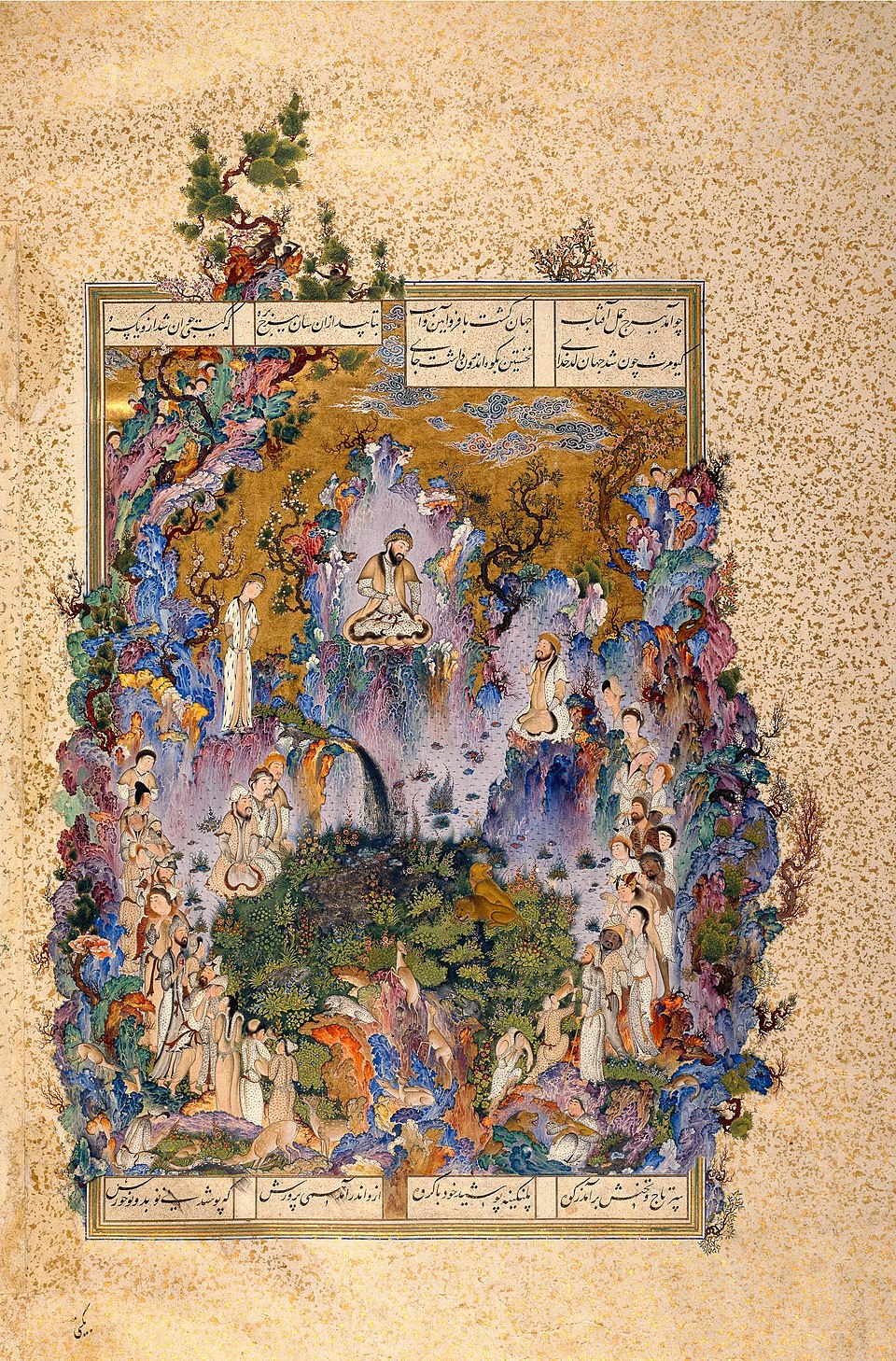
Overview
The Shahnameh, or Book of Kings, is an epic poem of roughly 50,000 couplets that the poet Ferdowsi composed between about 977 and 1010. It tells the story of Iran’s rulers from the mythical first kings through the historical Sasanian dynasty, ending with the Arab conquest of 651.
Description
The epic falls into a mythical age, a heroic age dominated by the warrior Rostam, and a historical age of recognizable kings. Written in New Persian with comparatively few Arabic loanwords, it is widely credited with helping to preserve the Persian language and its pre-Islamic heritage. Later courts turned the text into sumptuous illustrated manuscripts: the Baysonghor Shahnameh of 1430 and the Shah Tahmasp Shahnameh of the 1520s, whose painting of the Court of Gayumars is attributed to Sultan Muhammad, are counted among the peaks of Persian miniature painting.
History and legacy
Ferdowsi completed the poem around 1010 and, according to a story told by later writers, presented it to Sultan Mahmud of Ghazni and was bitterly disappointed by the reward — an account that is tradition rather than established fact. The epic became the model for Persian court literature, and its heroes remain household figures across the Persian-speaking world. Pages of the great manuscripts, including the dispersed Shah Tahmasp copy, are now prized holdings of museums worldwide.