Overview
Safavid Iran (1501–1736) was founded when Ismail I, hereditary head of the Safaviyya Sufi order, took Tabriz at the head of Turkoman Qizilbash cavalry and proclaimed himself shah. Its defining act was to impose Twelver Shia Islam as the state religion: the conversion of a mostly Sunni population proceeded over generations, creating the Shia Iran that persists today — and a lasting divide with the Sunni Ottomans.
Key developments
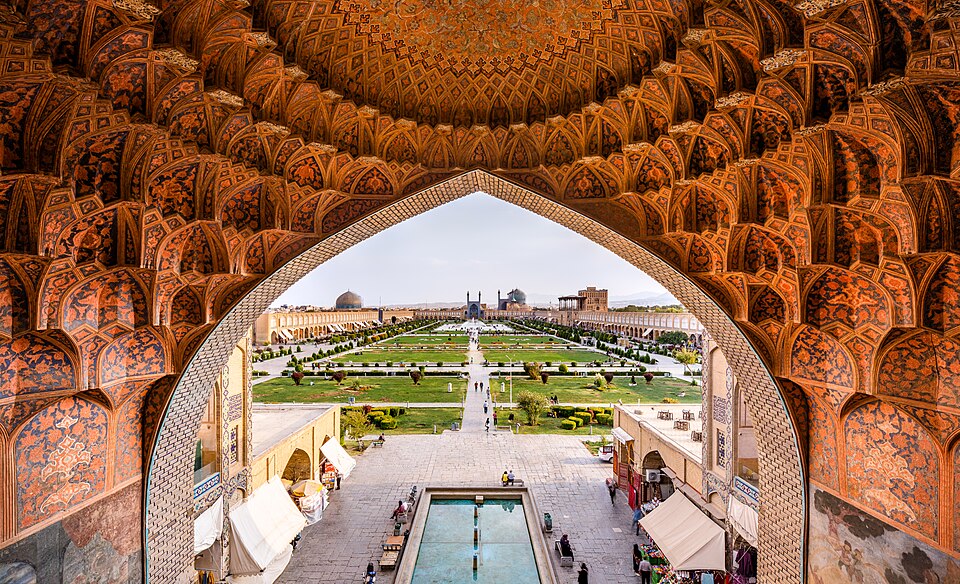
Defeat by Ottoman firearms at Chaldiran in 1514 cost Tabriz its security and punctured Ismail’s aura, and the Ottoman–Safavid wars ran for two centuries. The dynasty peaked under Abbas I (r. 1588–1629), who moved the capital to Isfahan in 1598; its royal square, mosques, and bridges made it a wonder of the age — half the world, as the saying went. The state balanced the Qizilbash with a corps of ghulam slave-soldiers, ran a royal silk monopoly alongside trade with European companies, and settled Armenian merchants at New Julfa, who ran the silk export network.
End and transition
In the 18th century weak shahs and tribal revolts sapped the state, and an Afghan rebel army took Isfahan in 1722. Nader ended nominal Safavid rule in 1736. The Safavids made Iran a Shia nation and refounded a unified Iranian state within roughly its modern cultural boundaries.