Overview
The Nasir al-Mulk Mosque stands in the old quarter of Shiraz. It was commissioned by Mirza Hasan Ali Khan, a Qajar noble titled Nasir al-Mulk, and built between 1876 and 1888 under the architects Mohammad Hasan-e Memar and Mohammad Reza Kashi-Saz-e Shirazi.
Description
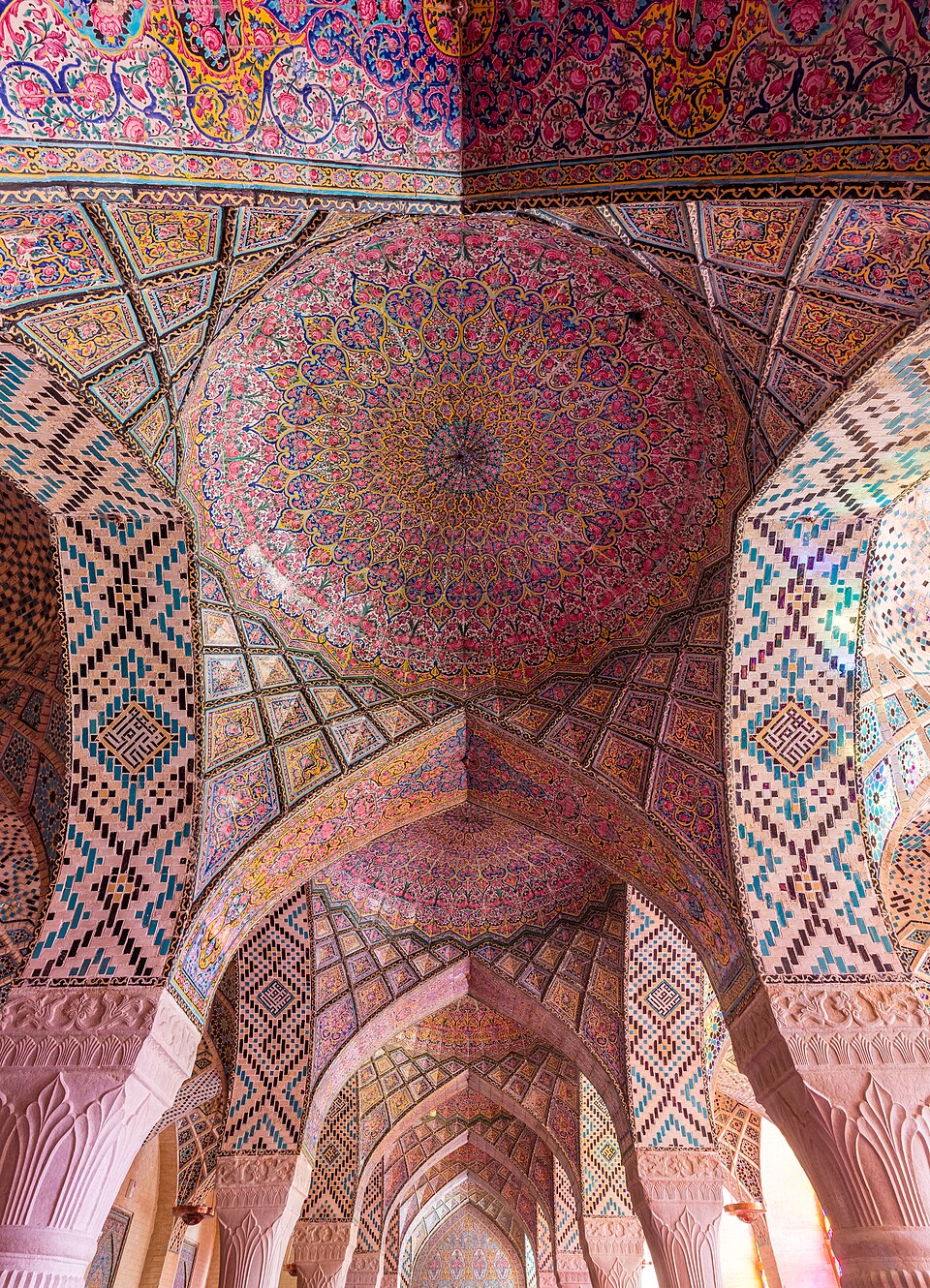
The mosque is famed for the extensive rose-pink faience that covers its vaults, an unusual palette that gave it the popular name Pink Mosque. The western winter prayer hall is fronted by wooden doors set with panels of coloured glass; on clear mornings the low sun projects their patterns across the carpets and twisted stone columns, an effect the building was deliberately oriented to catch. Traditional elements such as the five-concaved Pearl Arch sit alongside tilework that admits Qajar-era novelties, including European-style buildings among its floral motifs.
History and legacy
The mosque remains in use and is maintained by the endowment established by its founder’s family. Photographs of its morning light spread widely in the 2010s and made it one of the most recognised images of Iranian architecture, drawing visitors from around the world to Shiraz.