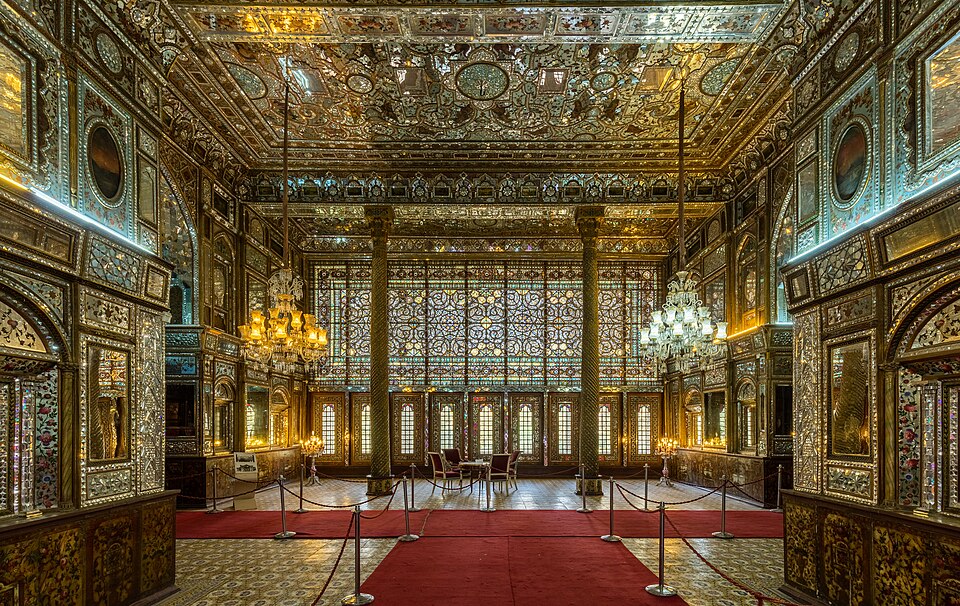
Overview
The Qajars, a dynasty of the Turkoman Qajar tribe, ruled Iran from 1796 to 1925 and moved the capital to Tehran, which has remained Iran’s capital ever since. The founder, Agha Mohammad Khan, reunified Iran with notorious severity — his sack of Tbilisi in September 1795 (the Battle of Krtsanisi) destroyed the city, with thousands killed or carried off, though figures vary — and was crowned in 1796 and assassinated in 1797. Two disastrous wars with Russia cost Iran the Caucasus under the treaties of Golestan (1813) and Turkmanchay (1828), the latter becoming a byword for humiliation. Thereafter Britain and Russia turned the country into a buffer of concessions and spheres of influence — formalized in 1907 — without formally colonizing it.
Key developments
A tobacco concession granted to a British subject in 1890 triggered the nationwide Tobacco Protest, backed by a clerical fatwa boycott, and was cancelled in 1892 — often seen as the first mass political victory in modern Iran. The D’Arcy oil concession of 1901 led to the first Middle East oil strike (1908) and the Anglo-Persian Oil Company. The Constitutional Revolution of 1905–1911 won Iran a constitution and a parliament. The era also produced Qajar painting and photography, the first newspapers, and the Dar ul-Funun polytechnic (1851), the start of modern education.
End and transition
In World War I, nominally neutral Iran was occupied by Russian, British, and Ottoman forces, and famine and chaos followed — estimates of the famine’s death toll vary enormously. The coup of 1921 brought Reza Khan to power, and in 1925 the Majlis deposed the last Qajar shah and Reza Khan was proclaimed shah as Reza Shah.