What happened
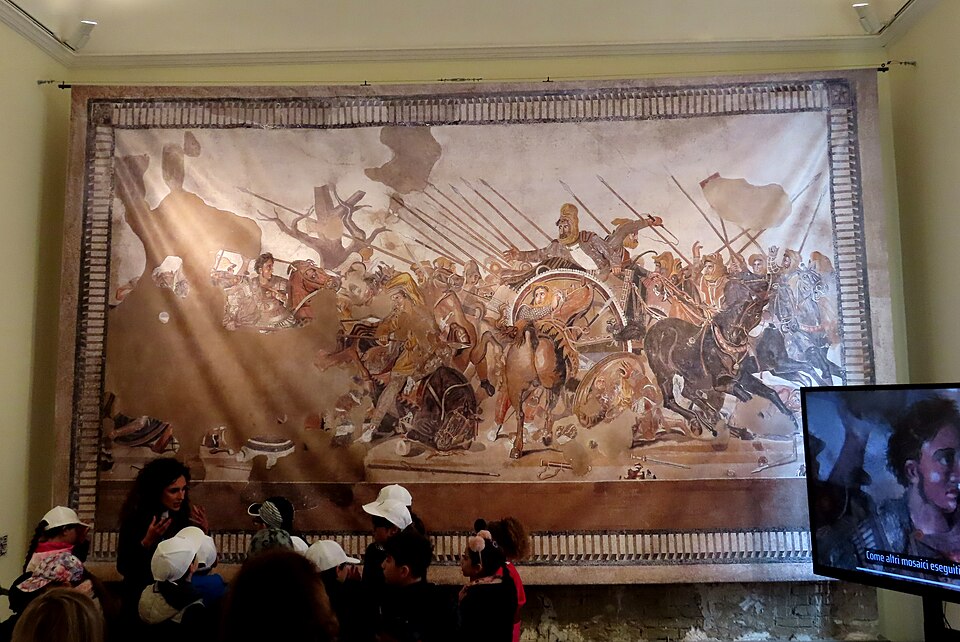
Alexander crossed into Asia in 334 BC and broke Achaemenid power in a series of battles: the Granicus (334 BC) opened Asia Minor, at Issus (333 BC) he defeated Darius III in person, and after a detour through Egypt the decisive battle at Gaugamela (331 BC) shattered the imperial army, whereupon Babylon and Susa surrendered with their treasuries. In 330 BC he burned Persepolis — deliberate revenge for the burning of Athens in 480 BC or a drunken act, according to differing ancient accounts. Darius III fled and was murdered by his own satrap Bessus; the ancient historians report that Alexander gave the king royal burial and punished the killer.
Background
The invader was Alexander III of Macedon. As the conquest advanced he increasingly presented himself as heir to the Persian kings rather than a mere conqueror, adopting Persian dress and court ceremony and holding mass weddings of his officers to Iranian noblewomen at Susa in 324 BC. These policies were resented by his Macedonians.
Consequences
For Iran the conquest ended the first Persian empire and opened more than five centuries of foreign-founded rule — Macedonian (Seleucid) until the mid-3rd century BC, then Parthian until AD 224 — with a lasting Greek cultural presence in Asia. In later Persian tradition Alexander carries a double memory: Zoroastrian texts curse him as the accursed destroyer, while in Persian epic he was transformed into a legendary king — Iskandar of the Shahnameh.