Overview
The empire was founded when Cyrus the Great overthrew the Medes in 550 BC. He went on to take Lydia and, in 539 BC, Babylon; his successors Cambyses II added Egypt in 525 BC, and Darius I the Indus valley and Thrace. The realm was ruled through some twenty or more provinces under satraps (governors), though the number of satrapies varies by source.
Key developments
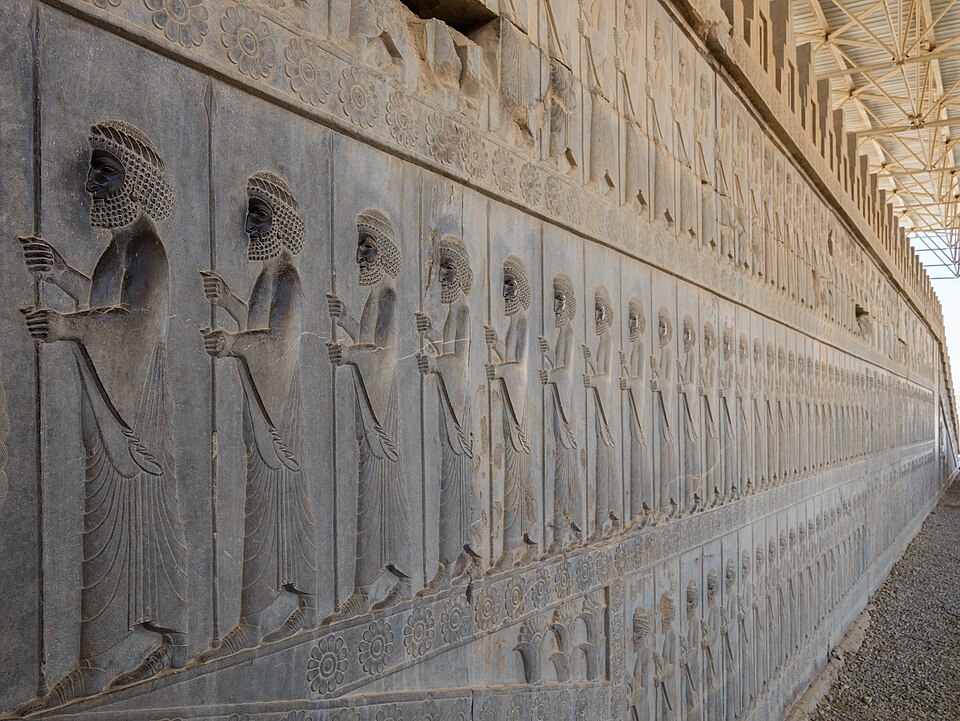
Infrastructure held the empire together: the Royal Road ran some 2,700 km from Sardis to Susa with relay stations, the gold daric provided a standard coinage, and Aramaic served as the administrative lingua franca. Rule was relatively tolerant of local religions and customs — the biblical and Babylonian sources credit Cyrus with restoring the Babylonian cults and allowing the Judean exiles to return. The ceremonial capitals were Pasargadae under Cyrus and then Persepolis from Darius I onward, while Susa and Babylon served as administrative centers.
End and transition
The wars with the Greeks (499–449 BC) checked the empire’s expansion westward. In 334–330 BC it fell to Alexander the Great. Yet its model of a universal, multi-ethnic empire endured: its administration influenced every later Iranian state and Hellenistic kingship.