What happened
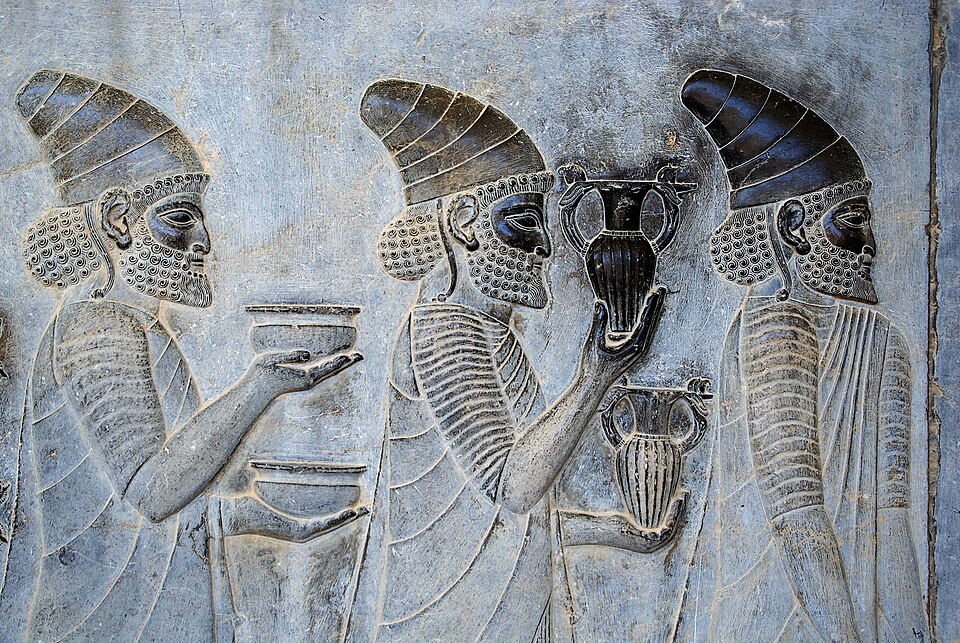
Around 518 BC Darius I began building on a great stone terrace in the mountains of Persis, near modern Shiraz; Xerxes I and his successors expanded the site over roughly 150 years. It was the ceremonial heart of the empire — audience halls such as the Apadana, which seated thousands, a treasury, and reliefs showing delegations of the empire’s peoples bringing gifts: royal ideology in stone. The everyday capitals were Susa, Babylon, and Ecbatana.
Background
The builders were paid workers. The Persepolis Fortification Tablets record rations and wages for men and women laborers from across the empire — direct evidence against the image of a slave-built monument. The architecture blends the empire’s traditions, joining Persian columned halls with Egyptian, Mesopotamian, Lydian, and Ionian craftsmanship.
Consequences
Alexander the Great burned Persepolis in 330 BC; whether that was deliberate policy or, as some ancient accounts tell it, a drunken act is still debated. The ruins, known in Persian as Takht-e Jamshid, the Throne of Jamshid, became a UNESCO World Heritage site in 1979 and rank among Iran’s most famous ancient monuments.