What happened
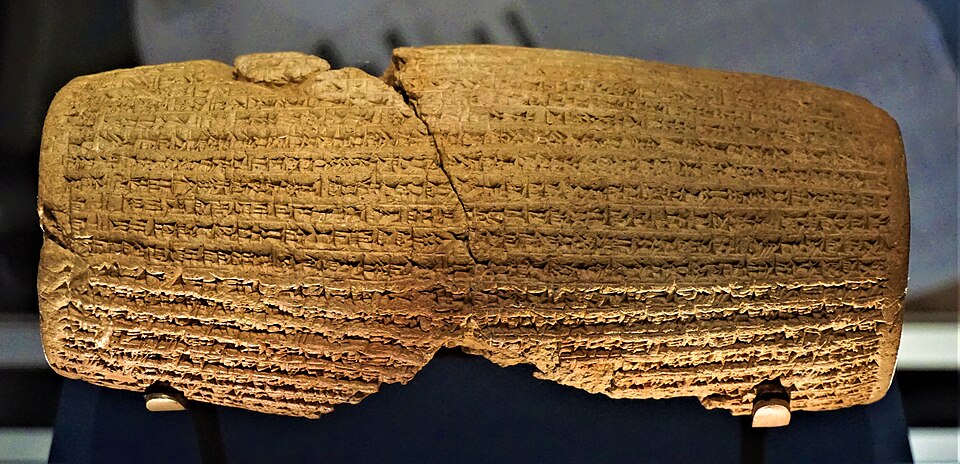
After taking Babylon in 539 BC, Cyrus had a clay foundation cylinder inscribed in Babylonian cuneiform and buried in the city wall. In it Cyrus presents himself as chosen by the god Marduk, denounces the deposed king Nabonidus, and records restoring sanctuaries and returning deported peoples and their gods.
Background
The cylinder is a proclamation in the traditional Babylonian genre of the restorer-king. Its content matches the policy attested in the Hebrew Bible of returning the Judean exiles.
Consequences
The cylinder was found in 1879 by Hormuzd Rassam during a British Museum excavation at Babylon and has been kept in the British Museum since. It is often called the first charter of human rights, but historians widely question that modern reading, noting that the text belongs to an established genre of Mesopotamian royal proclamations; a replica is displayed at the United Nations headquarters. In Iran it has become a national symbol — its exhibitions in Tehran in 1971 and 2010 drew enormous public interest — and it remains a touchstone in debates about empire and tolerance.