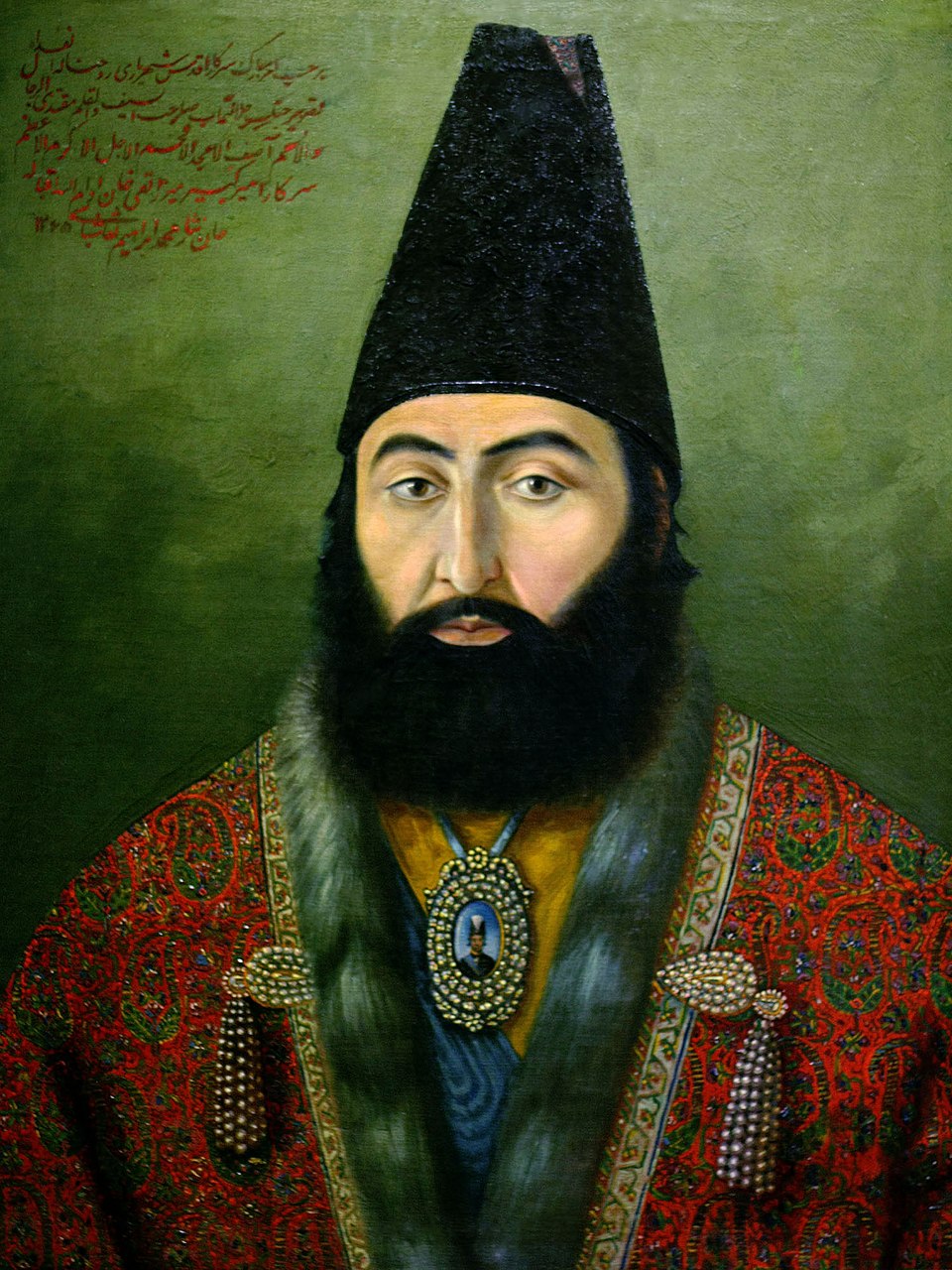
Who they were
Mirza Taqi Khan, known by his title Amir Kabir (c. 1807–1852), was born a cook’s son in a statesman’s household and rose through the Qajar bureaucracy by ability. As chief minister to the young Naser al-Din Shah from 1848 to 1851, he is often called the greatest reformer of nineteenth-century Iran.
What they did
In three years he founded the Dar ul-Funun polytechnic — Iran’s first modern institution of higher learning, opened in late December 1851, about six weeks after his dismissal — cut court stipends and corruption, reorganized the finances and the army, curbed the reach of the clerical courts, founded the first Persian newspaper of record, Vaqaye-e Ettefaqiyeh, and promoted vaccination and domestic manufacturing. His austerity made powerful enemies among the courtiers and the queen mother. Dismissed in 1851 and exiled to Kashan, he was murdered in the bathhouse of the Fin Garden in January 1852 on a royal warrant the young shah had been induced to sign. Tradition holds that the shah later regretted it.
Legacy
In the standard historiographical reading he stands as a national symbol of reform cut short — the road-not-taken figure of Qajar history. The Fin Garden murder site and his Dar ul-Funun remain remembered landmarks.