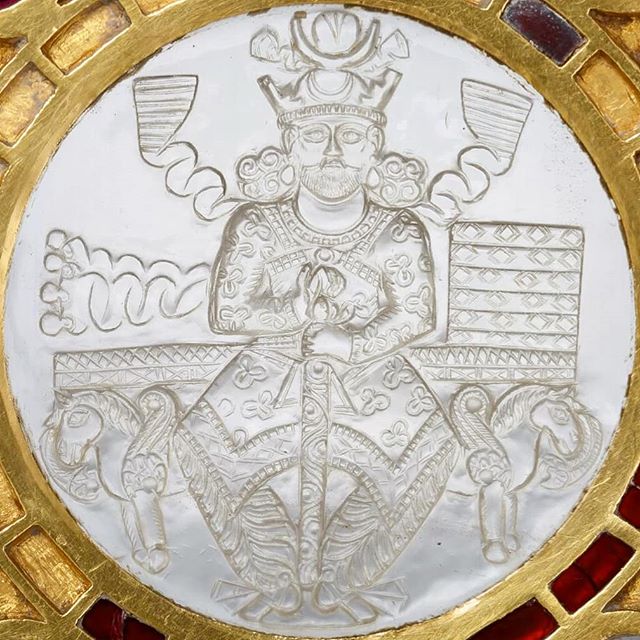
Who they were
Khosrow I reigned from 531 to 579 under the throne name Anushirvan, meaning possessor of an immortal soul. He restored order after the upheaval of the Mazdakite movement, executing its leader Mazdak and suppressing the movement.
What they did
His reforms replaced variable harvest shares with a fixed land-tax system, created a paid professional cavalry, and promoted the lesser gentry, the dehqans, as administrators. Against Byzantium he fought Justinian through the Eternal Peace of 532 and its breakdown, sacked Antioch in 540 and deported its people to a new city near Ctesiphon, and in the east ended the Hephthalite menace in alliance with the Turks. He was also a patron of learning: when Justinian closed the academy at Athens in 529, Khosrow welcomed the Greek philosophers, though the sources indicate their stay was brief. He had Indian works translated — the Panchatantra came west through his physician Borzuya as Kalila and Dimna — and tradition holds that chess arrived from India at his court.
Legacy
The reform package of fixed taxation, a professional army, and gentry administrators is held to have influenced the states of the later Islamic world. In Persian and Arabic memory, Anushirvan the Just became the byword for the ideal king — a reputation in which history and legend are mixed.