Who they were
Shapur I was the second king of the Sasanian dynasty and the son of its founder, Ardashir I. He reigned from about 240 to about 270, though the exact dates vary slightly between reckonings.
What they did
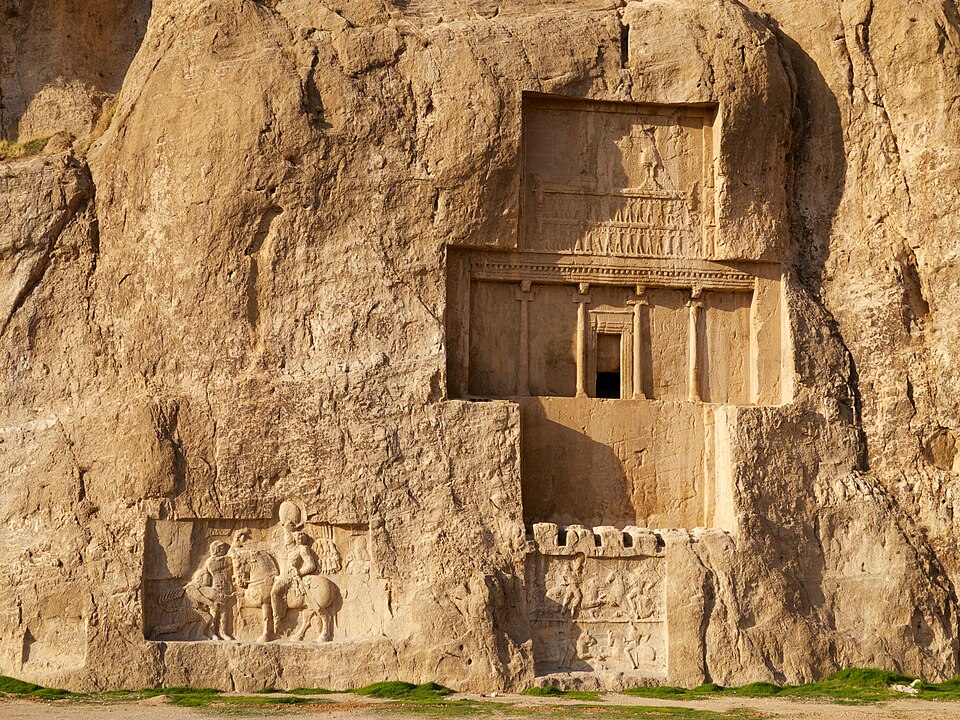
Shapur fought three campaigns against Rome and, as his great inscription at Naqsh-e Rostam recounts, prevailed over three emperors. Gordian III died on campaign — Persian and Roman accounts differ on how — Philip the Arab paid a ransom for peace, and Valerian was taken alive at Edessa in 260, generally considered the only Roman emperor ever captured. The captive emperor and deported populations appear in triumphal rock reliefs at Naqsh-e Rostam and Bishapur, and the engineering skills of Roman prisoners went into Persian projects: the Band-e Kaisar bridge-dam at Shushtar is traditionally linked to them. He founded cities, including Bishapur and Gundeshapur. He also patronized the prophet Mani, founder of Manichaeism, and allowed his mission; Mani was later executed under one of Shapur’s successors.
Legacy
Shapur’s great inscription — the so-called Res Gestae Divi Saporis — is a key primary source for the entire era. Above all, he fixed the Sasanian image of Persia as Rome’s equal, a standing shift in the ancient balance of power.