Overview
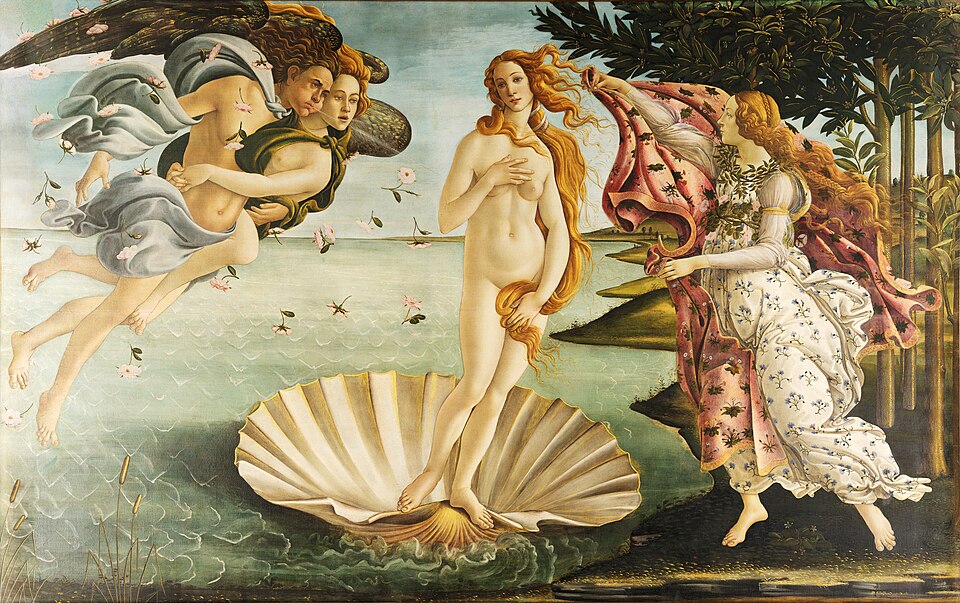
Botticelli painted the work around 1484–1486, most likely for a member of the Medici family. Unusually for the time, it is tempera on canvas rather than on a wooden panel.
Description
Venus, newly born from the sea, drifts ashore on a shell, blown by the wind god Zephyrus entwined with a nymph, while a Hora of spring waits with a flowered cloak. Botticelli favors flowing line and grace over strict anatomy — the goddess’s pose echoes ancient Venus statues.
History and legacy
It was among the first monumental mythological nudes of the Renaissance and, after centuries of relative neglect, the 19th-century revival of Botticelli made it one of the most recognized paintings in the world. It has hung in the Uffizi since the 19th century.