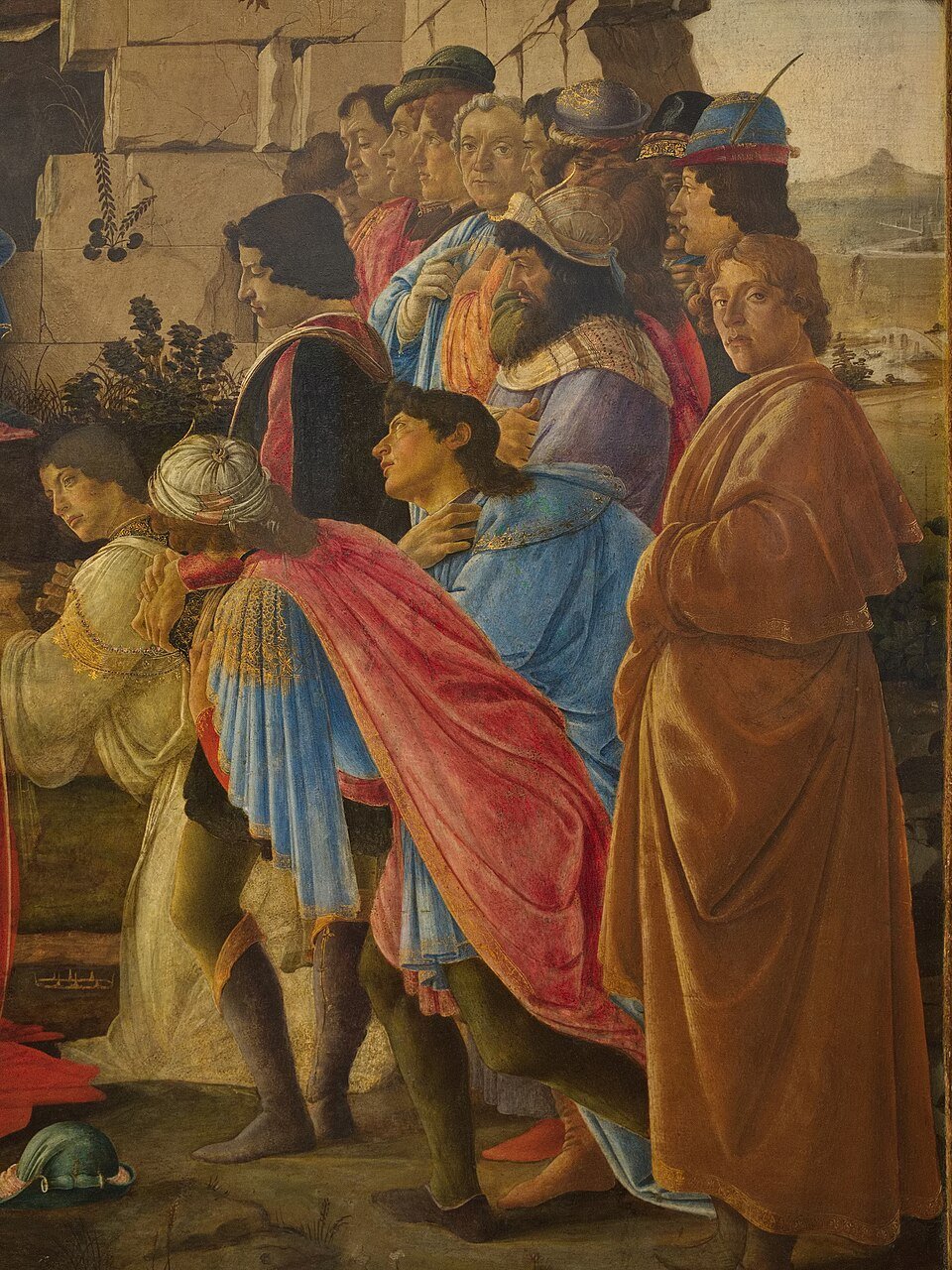
Who they were
Botticelli was a painter of the Florentine Renaissance, born around 1445 and trained in the workshop of Filippo Lippi. He worked in Florence nearly all his life, much of it under the patronage of the Medici circle.
What they did
His mythological paintings — the Primavera, from around 1480, and The Birth of Venus, from the mid-1480s — brought large-scale classical mythology into Renaissance art and remain its most famous images. In 1481–82 he was called to Rome to paint wall frescoes in the newly built Sistine Chapel. He painted many Madonnas and portraits and drew a remarkable series of illustrations to Dante’s Divine Comedy. In the 1490s his style turned austere and devotional, a change often linked to the influence of the preacher Savonarola, though the extent of that influence is debated.
Legacy
Eclipsed after his death by the High Renaissance of Leonardo, Michelangelo, and Raphael, Botticelli was largely forgotten for centuries until 19th-century critics revived his reputation. The Birth of Venus is now among the most reproduced images in Western art, and both mythologies hang in the Uffizi in Florence.