Overview
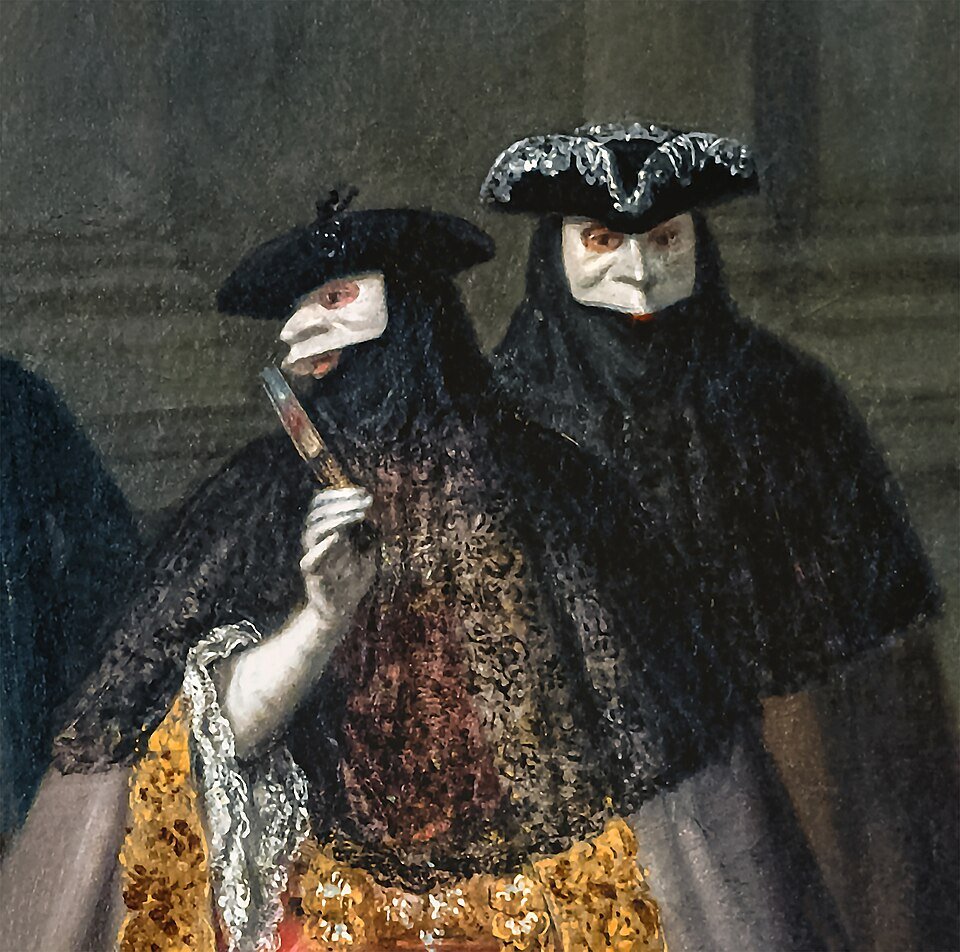
A bauta is a full face mask of white, its lower edge projecting sharply forward so that the wearer can eat, drink, and speak without removing it, but with no opening for the mouth. Paired with a black three-cornered hat and the tabarro cloak, it formed a complete, anonymous costume.
How it is worn
It is worn covering the whole face, the cloak drawn about the body and the tricorn low, so that sex, rank, and identity all vanish. Sanctioned for long stretches of the year, it allowed nobles and commoners alike to gamble, court, and conduct business incognito.
History
The bauta was central to the masked life of the Venetian Republic and appears throughout the paintings of Pietro Longhi and the scenes of Carnival. Regulated by law and tied to the Republic’s peculiar social freedoms, it remains the emblem of the Venetian mask to this day.