Overview
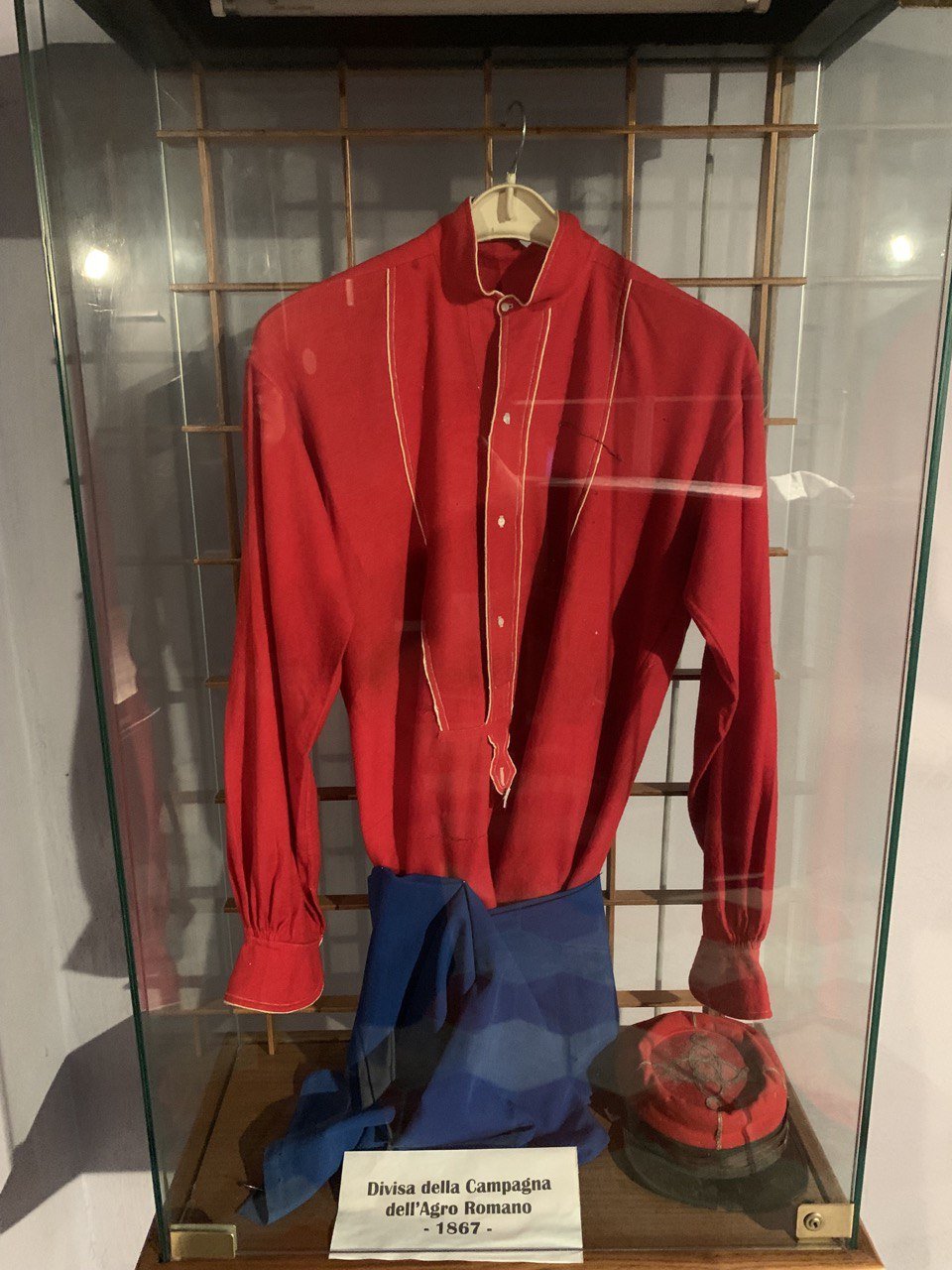
It is a shirt, not a tunic: pulled on over the head, buttoning only partway down the chest, with full sleeves gathered into a cuff and no tailoring at the waist. The accepted account of the colour is that the Italian Legion Garibaldi commanded in Montevideo in the 1840s acquired a consignment of red woollen shirts that had been made for workers in the Argentine meat-salting plants and could not be shipped. Whether or not the story is exact in every detail, the practical logic behind it is not in doubt — a volunteer force with no supply system took what could be had in quantity, and one colour worn by everyone does the work a uniform does.
How it is worn
It was worn loose over whatever trousers a man owned, with a soft cap and often a cloak, and that is the whole of it. There were no facings, no lace, no epaulettes and no rank marks — an officer’s shirt was the same shirt. The absence is the point: against the elaborate uniforms of the Bourbon and Austrian armies the volunteers looked like what they claimed to be, a people in arms rather than a royal instrument. The shirt on this page is an original, kept with the cap and trousers worn on the Agro Romano campaign of 1867.
History
The Thousand who sailed for Sicily in 1860 wore it, and after that the shirt travelled further than the movement did. Sympathisers across Europe put it on at rallies. When Garibaldi visited England in 1864 he was met by enormous crowds, and within a season British dressmakers were selling women a loose blouse buttoned at the front and gathered at the waist under the name of the Garibaldi shirt — one of the first garments to move from menswear into a mass women’s fashion, and the ancestor of the ordinary blouse.