Overview
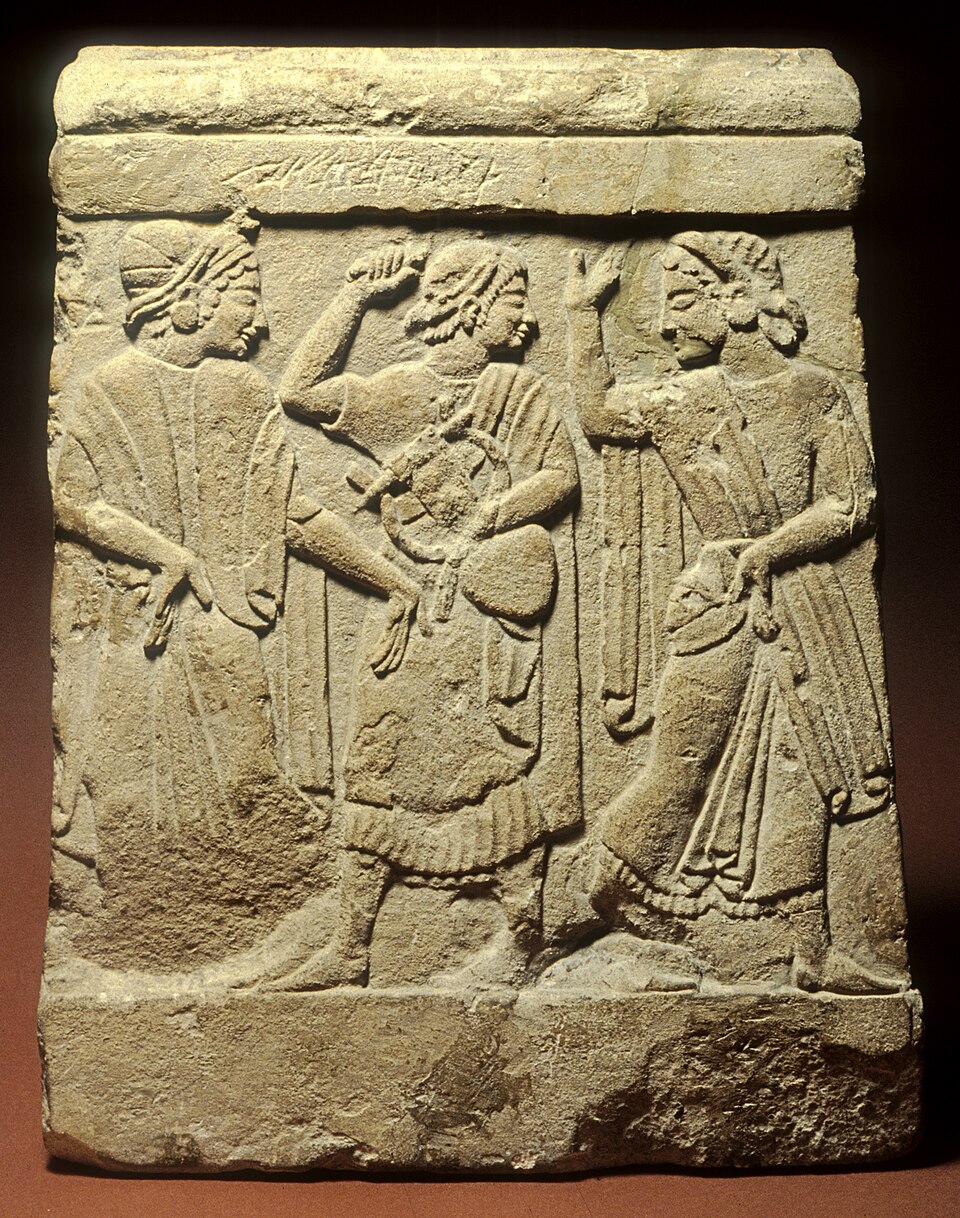
Everything known comes from painted tombs, bronze figurines and the reclining couples on sarcophagus lids, all of them showing dress from the outside and none of them a surviving garment. The tebenna is a semicircular or rounded mantle draped over the left shoulder and under the right arm, shorter and lighter than the later toga and often edged with a woven border. Under it sits a tunic, close and short for men, long and pleated for women, sometimes in a checked or banded weave that says the cloth was patterned on the loom rather than embroidered.
How it is worn
The mantle is draped, not fastened: it hangs from one shoulder, crosses the back, and is held by its own weight and by the arm that carries it, which is why figures shown in a tebenna keep one arm folded across the body. Women’s dress adds a mantle over the head, hair in long plaits down the front of the shoulders, and the tutulus, a conical cap. Both sexes wear shoes with an upturned point, the calcei repandi, which appear in Etruscan art before they appear anywhere in Italy and are one of the recognisable Etruscan exports.
History
Rome took the mantle and made it a citizen’s uniform. The toga is larger, heavier and eventually unwearable without help, but its drape and its bordered edge come out of the tebenna, and Roman writers credited the Etruscans with it. The pointed shoe and the tutulus went the other way and stayed provincial curiosities, remembered mostly through the priestly costume of Rome, where the cap survived in the flamen’s dress after the people who invented it had been absorbed.