What happened
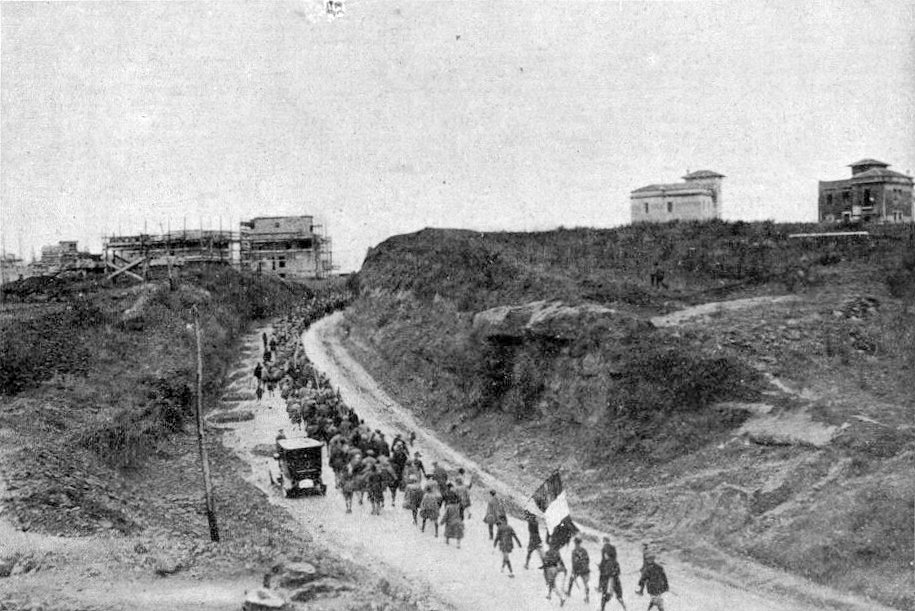
In late October 1922 tens of thousands of armed Fascist squad members, the Blackshirts, converged on Rome demanding power. Prime minister Luigi Facta prepared a decree of martial law, but King Victor Emmanuel III refused to sign it. On 30 October Mussolini, who had waited in Milan, arrived by train and was appointed to form a government; his followers then paraded through the capital.
Background
Postwar Italy was in crisis: inflation, mass strikes and land occupations in 1919–20, and middle-class fear of a socialist revolution. Fascist squads had spent two years breaking labor organizations with violence while liberal governments proved short-lived and unable to restore order, and parts of the elite came to see Mussolini as usable.
Consequences
Mussolini at first led a coalition within constitutional forms, then dismantled them. After the 1924 murder of the socialist deputy Giacomo Matteotti, widely attributed to Fascists, Mussolini claimed political responsibility for Fascist violence in a January 1925 speech, and by 1926 Italy was a one-party dictatorship. The regime later celebrated the march as a heroic revolution; historians generally describe it as a transfer of power constitutional in form but obtained under armed threat.