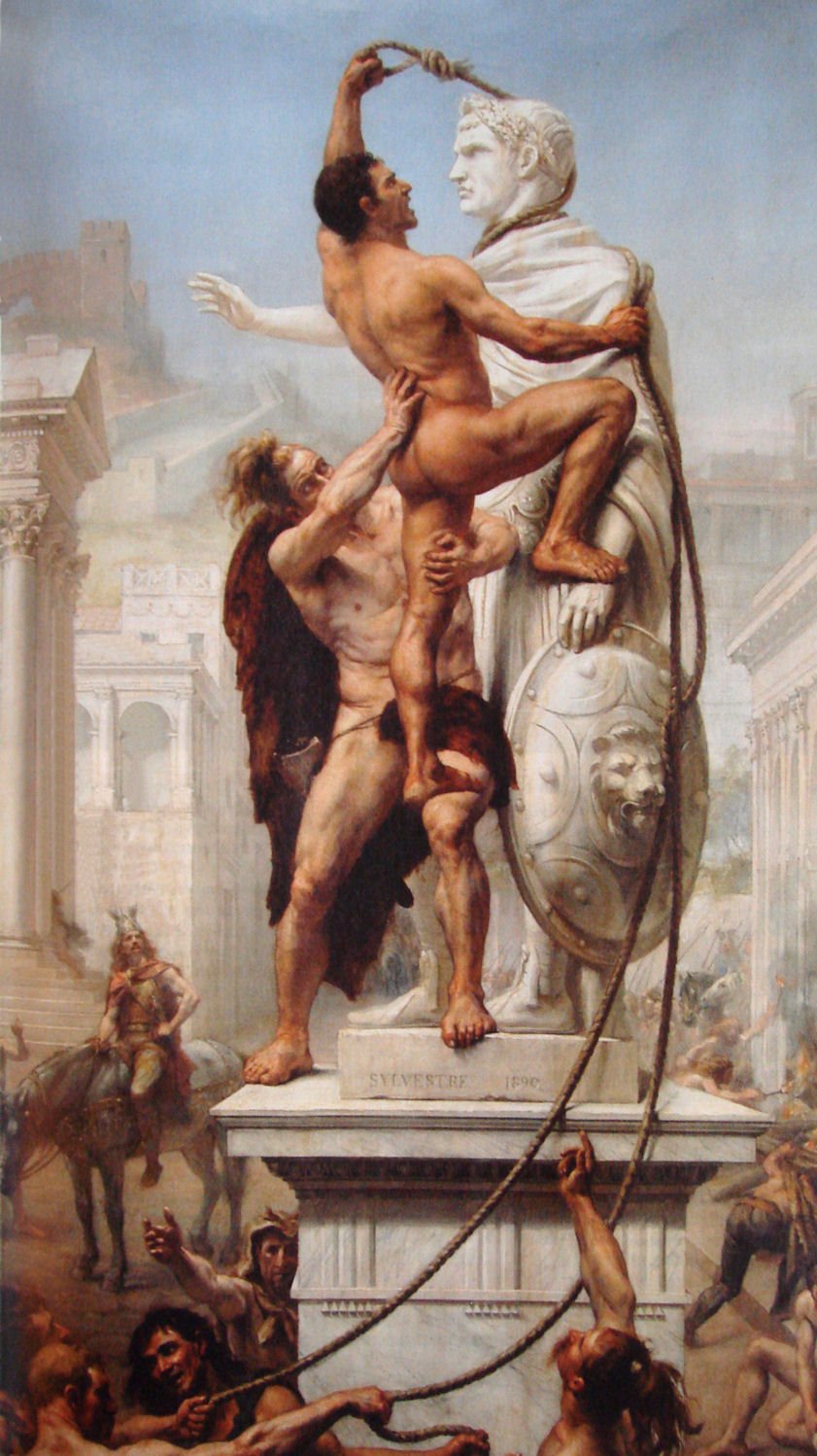
What happened
On 24 August 410 the Visigoths under their king Alaric entered Rome through the Salarian Gate and plundered the city for three days. Ancient accounts describe looting and burning but note that the basilicas of Peter and Paul were spared as places of refuge. It was the first time in about eight centuries — since the Gallic sack traditionally dated around 390 BC — that Rome had fallen to a foreign enemy.
Background
Alaric had twice before besieged Rome, seeking land and payment for his people from an imperial court that had withdrawn to the safety of Ravenna. When years of negotiation and blockade produced nothing, his army entered the city.
Consequences
Rome was no longer the imperial capital, so the practical damage to the empire was limited, but the psychological shock ran across the Mediterranean world. Jerome wrote that the city which had taken the whole world was itself taken, and Augustine wrote The City of God in part to answer the disaster. Alaric died soon afterward, and the sack came to be seen as the herald of the Western Empire’s end in 476.