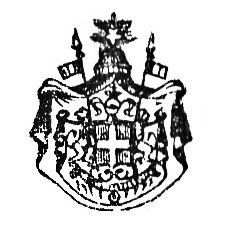
Overview
It was proclaimed on 17 March 1861 by a parliament sitting in Turin, and it took another ten years to reach Rome: Venetia came in 1866, the capital moved from Turin to Florence in 1865, and only in 1871 to Rome. Its constitution was the charter Piedmont had granted in 1848, and its electorate at the start was fewer than one Italian in fifty — a state made by a small northern political class for a country most of whose people did not speak Italian. Massimo d’Azeglio’s remark that Italy had been made and Italians still had to be is a fair summary of the eighty-five years that followed.
Key developments
Liberal Italy had a parliamentary system with limited suffrage, an industrializing north set against a poorer south (the “Southern Question”), mass emigration, and colonial ventures in Africa. Italy joined the First World War on the Allied side in 1915 and won at heavy cost, but postwar resentment and unrest opened the way to Benito Mussolini’s Fascists, whose March on Rome (1922) brought Mussolini to power. His dictatorship signed the Lateran Treaty with the papacy (1929), invaded Ethiopia (1935), allied with Nazi Germany, and entered the Second World War in 1940.
End and transition
Military defeat led to Mussolini’s fall in July 1943, an armistice, German occupation, and a resistance struggle until liberation in 1945. Discredited by its ties to Fascism, the monarchy was abolished by referendum on 2 June 1946, creating the Republic.