Overview
The period takes its name from the kofun, the burial mounds of the elite, famed for their great keyhole shape. During these centuries the Yamato polity consolidated its primacy — the core of the later imperial line.
Key developments
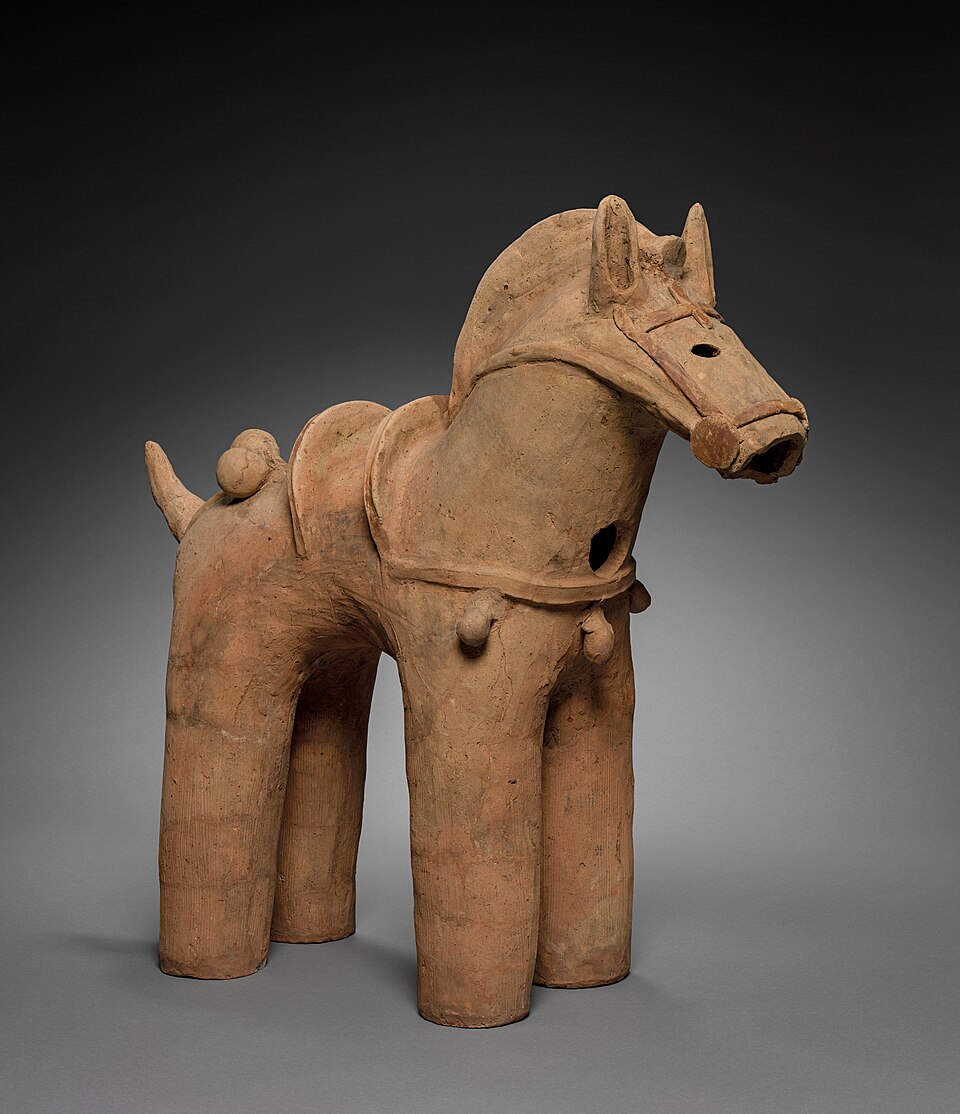
The largest mound, Daisen Kofun in Sakai — attributed by tradition to Emperor Nintoku (5th century) — is among the largest tombs on earth by area; the Mozu-Furuichi mound groups became UNESCO World Heritage in 2019. Haniwa clay figures ringed the mounds. Immigrants from the continent (toraijin) brought Chinese writing, ironworking and other technologies.
End and transition
The period conventionally ends in 538, when the official introduction of Buddhism opened the Asuka period.