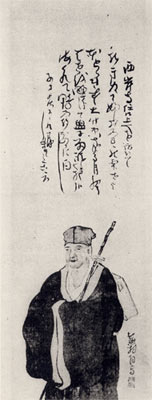
Who they were
Matsuo Basho was the master who raised haiku — then called haikai — to high art. Born in Iga (modern Mie), he served a young lord before making poetry his life in Edo, taking his name from the basho (banana) tree at his hut.
What they did
His travel accounts fuse prose and verse. The greatest, “Oku no Hosomichi” (The Narrow Road to the Deep North), records a five-month journey of roughly 2,400 kilometers through northern Japan in 1689; it was published in 1702. His frog poem — old pond, a frog leaps in, the sound of water — is the most famous haiku ever written. His ideals were sabi (lean quietness), karumi (lightness), and the poetry of the everyday. He died on a journey in Osaka in 1694.
Legacy
Basho remains the standard against which all haiku is measured, and his travel routes are pilgrimages for poets to this day.