Overview
From 1603 the Tokugawa shogunate governed from Edo (modern Tokyo), maintaining some 260 years of internal peace. Control rested on the bakuhan system of shogunate and domains, alternate attendance (sankin-kotai) binding daimyo to Edo, and a hereditary status order of warriors, farmers, artisans, and merchants. From the 1630s the sakoku seclusion policy limited foreign contact to Dutch and Chinese trade at Nagasaki, with further routes through Korea, Ryukyu, and the Ainu.
Key developments
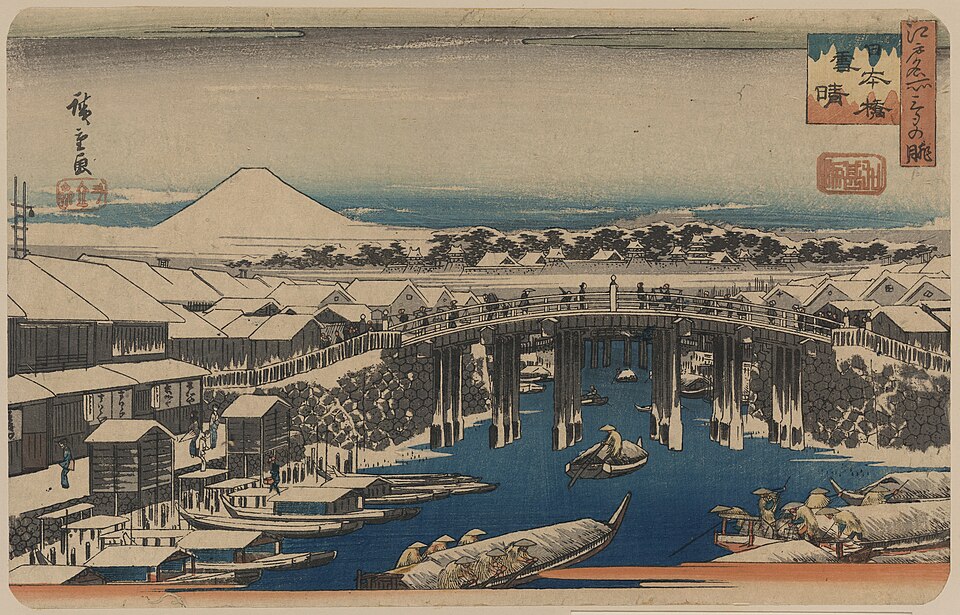
Cities boomed: Edo grew into one of the world’s largest cities, with around a million people in the 18th century. Genroku culture produced kabuki, ukiyo-e prints, and Basho’s haiku, while temple schools spread literacy.
End and transition
Perry’s Black Ships arrived in 1853, followed by unequal treaties (1858) and bakumatsu turmoil. The last shogun returned power to the emperor (Taisei Hokan, 1867), and the Boshin War (1868–69) followed.