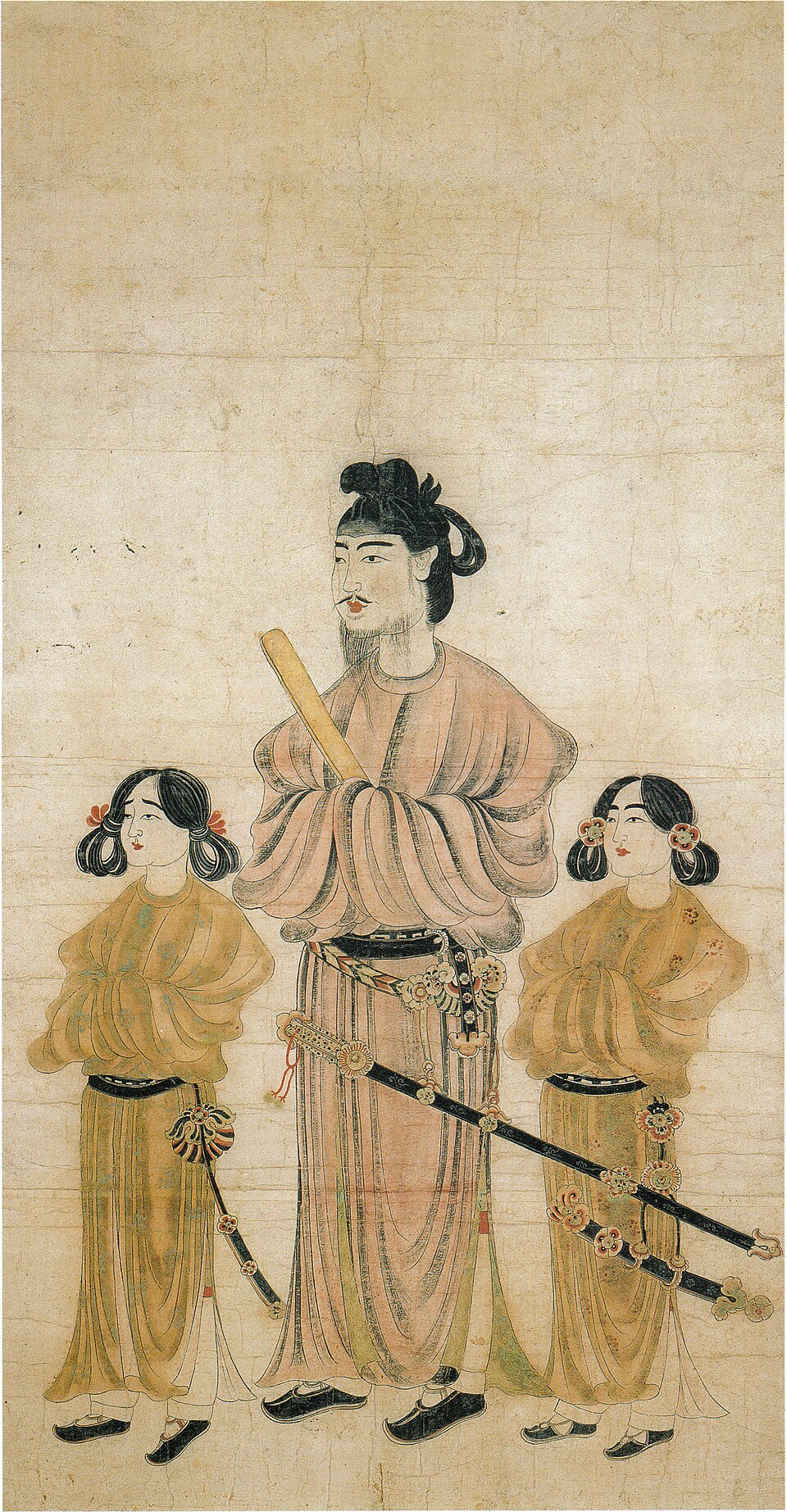
Who they were
A prince of the Asuka court who, according to tradition, served as regent for his aunt Empress Suiko. Later centuries built a vast legend around him — sutra commentaries, miracle tales — and modern scholars debate how much of the traditional image is historical.
What they did
He is credited with the twelve cap-rank system (603), which promoted officials by merit, and the Seventeen-Article Constitution (604), which opens with the ideal that “harmony is to be valued.” From 607 he sent embassies to Sui China, one carrying the famous letter from “the Son of Heaven of the land where the sun rises.” He vigorously promoted Buddhism, founding temples including Shitennō-ji and Hōryū-ji.
Legacy
He became the archetype of the sage-statesman and Buddhism’s princely patron in Japan. His portrait appeared on multiple banknotes.