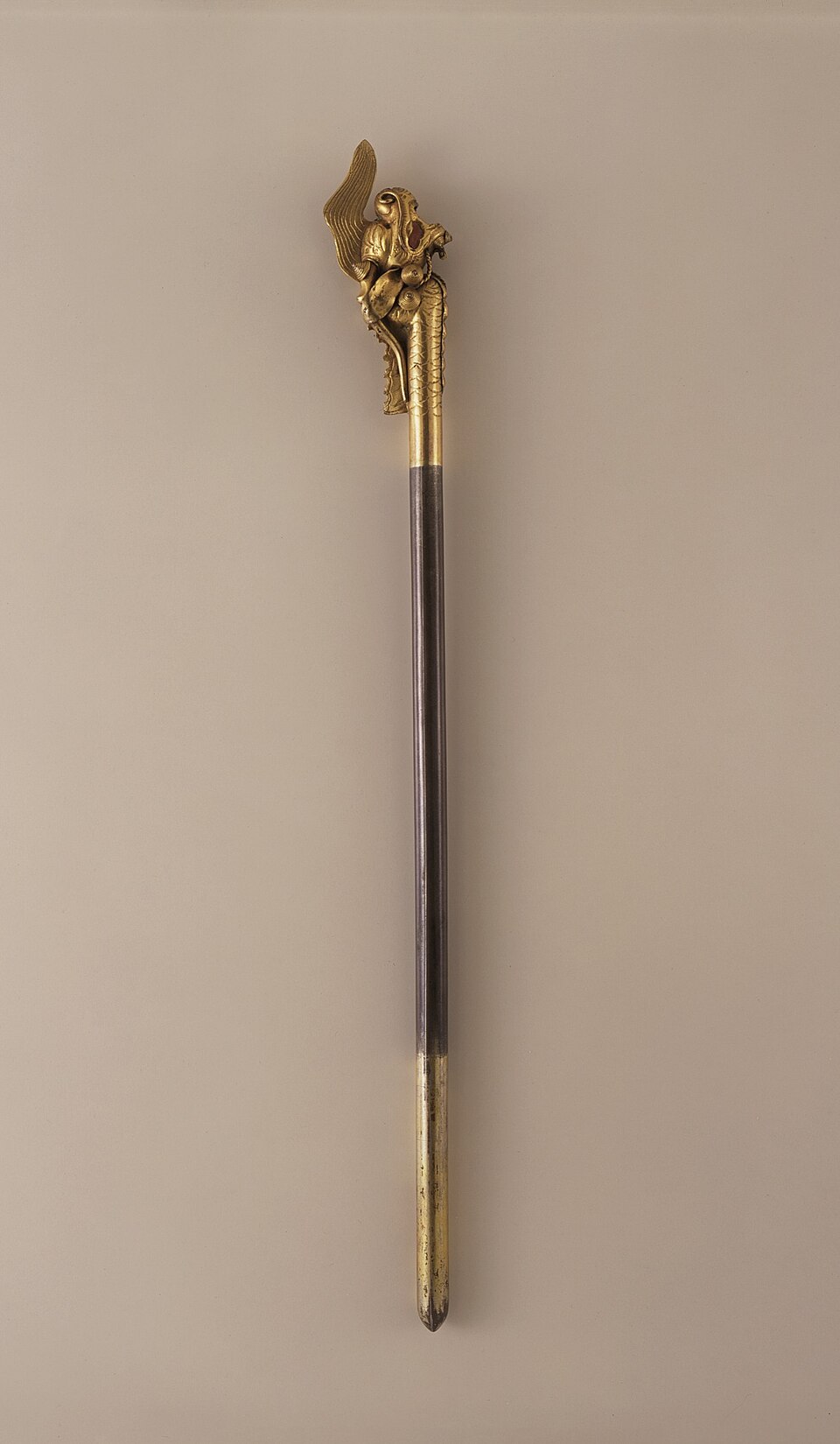
Overview
It is a single straight pin, fifteen to thirty centimetres long, with one plain point and one carved head. The head is the whole statement: a dragon or phoenix head in gold for the palace, jade or coral for the gentry, and wood, horn or brass for everyone else — the Joseon sumptuary codes name which material each class could use. A shorter version, the jamdi, secured a ceremonial wig.
How it is worn
The hair is parted, gathered low at the nape and twisted into a coil, and the binyeo is pushed horizontally through it so that the head sits on one side and the tip shows on the other. It is the fastening, not an ornament laid on top: pull it out and the whole hairstyle falls. Because only married women wore the coiled style, putting in a binyeo was the visible part of becoming a wife, and it was a wedding gift from the husband’s family.
History
Coiled hair with a long pin is old across the region, and the binyeo becomes a regulated class marker under Joseon, when the state legislated who could wear gold and who could not. Court women wore it with the daenggi ribbon and the jokduri crown for ceremonies. Short hair and Western dress ended everyday use in the twentieth century, and it now appears at weddings, in hanbok photography and in period drama, where the head still reads rank at a glance.